Advancing American Freedom
101 Policy Solutions to Make Life More Affordable. Affordability 101 offers a playbook with 101 policy solutions to make life more affordable in 2026 and beyond.
Advancing American Freedom · September 2026
101 Policy Solutions to Make Life More Affordable
The most durable way to make life more affordable is remarkably straightforward: make it easier to produce more. Build more homes. Produce more energy. Encourage more businesses to compete for customers. Give patients more health care choices. Let workers enter professions without unnecessary government barriers. Encourage investment and innovation. Let families decide how to spend more of their own money.
Chapter 1
13 memosConsumer Choice offers policy solutions that would keep the government from dictating or influencing which products or features Americans can purchase—and which features they must purchase.
“It’s not the government’s function to… impose unnecessary restrictions on the marketplace.”Ronald Reagan
Memo 1 of 101
Federal policymakers should eliminate or relax laws and regulations that mandate efficiency standards for consumer products and appliances. Disclosure and consumer choice, rather than mandates, should be the policy paradigm.
David R. Burton
Read memo »Memo 2 of 101
Officials should promote order and affordability by upholding property rights and defending against criminality.
Preston Brashers
Read memo »Memo 3 of 101
Unnecessary regulations drive up costs and limit the supply of childcare while ineffective federal spending reduces its quality and accessibility.
Rachel Greszler
Read memo »Memo 4 of 101
Mandated annual and biennial safety inspections for personal vehicles are ineffective at improving road safety, but they are a significant imposition on people’s time and resources.
Preston Brashers
Read memo »Memo 5 of 101
Policymakers should reject electric vehicle (EV) mandates and eliminate laws and regulations that limit the types of vehicles that Americans can drive.
Preston Brashers
Read memo »Memo 6 of 101
Congress should clarify that the Environmental Protection Agency (EPA) lacks authority under the Clean Air Act (CAA) to regulate carbon dioxide (CO2) and other greenhouse gases (GHGs) that don’t directly harm human health.
Preston Brashers
Read memo »Memo 7 of 101
Individuals—not employers—should be in charge of choosing their benefits like health insurance, and they shouldn’t have to work for a particular company to get them.
Rachel Greszler
Read memo »Memo 8 of 101
Lawmakers should expand access to Association Health Plans so that more people in non-traditional jobs or with shared geography or interests can pool together to obtain more affordable health insurance.
Rachel Greszler
Read memo »Memo 9 of 101
Congress should allow greater use of telemedicine to enable patients to have access to a larger pool of available physicians.
Paul J. Larkin
Read memo »Memo 10 of 101
Lawmakers should enact health care reforms that give consumers more agency over their health care choices, moving away from one-size-fits-all plans controlled by the government and employers in favor of Health Savings Accounts.
Gadai Bulgac
Read memo »Memo 11 of 101
Congress should set a per-employee cap on the amount employers may deduct for untaxed non-monetary benefits. This would reduce an existing distortion in the tax code that discourages paying higher wages.
Preston Brashers
Read memo »Memo 12 of 101
Congress should require universities to share in the losses on the degrees they sell and stop lending taxpayer money for degrees that don't pay off.
Richard Stern
Read memo »Memo 13 of 101
States should adopt education savings accounts (ESAs) and allow parents to direct funding for their children’s education to programs that are right for them.
Preston Brashers
Read memo »Chapter 2
7 memosAbundant Energy and Natural Resources describes ways that policymakers could remove unnecessary government barriers to accessing the energy resources that power America’s economy, and it includes ideas to improve the government’s stewardship of the natural resources it manages.
“Our country was built on cheap energy.”Ronald Reagan
Memo 14 of 101
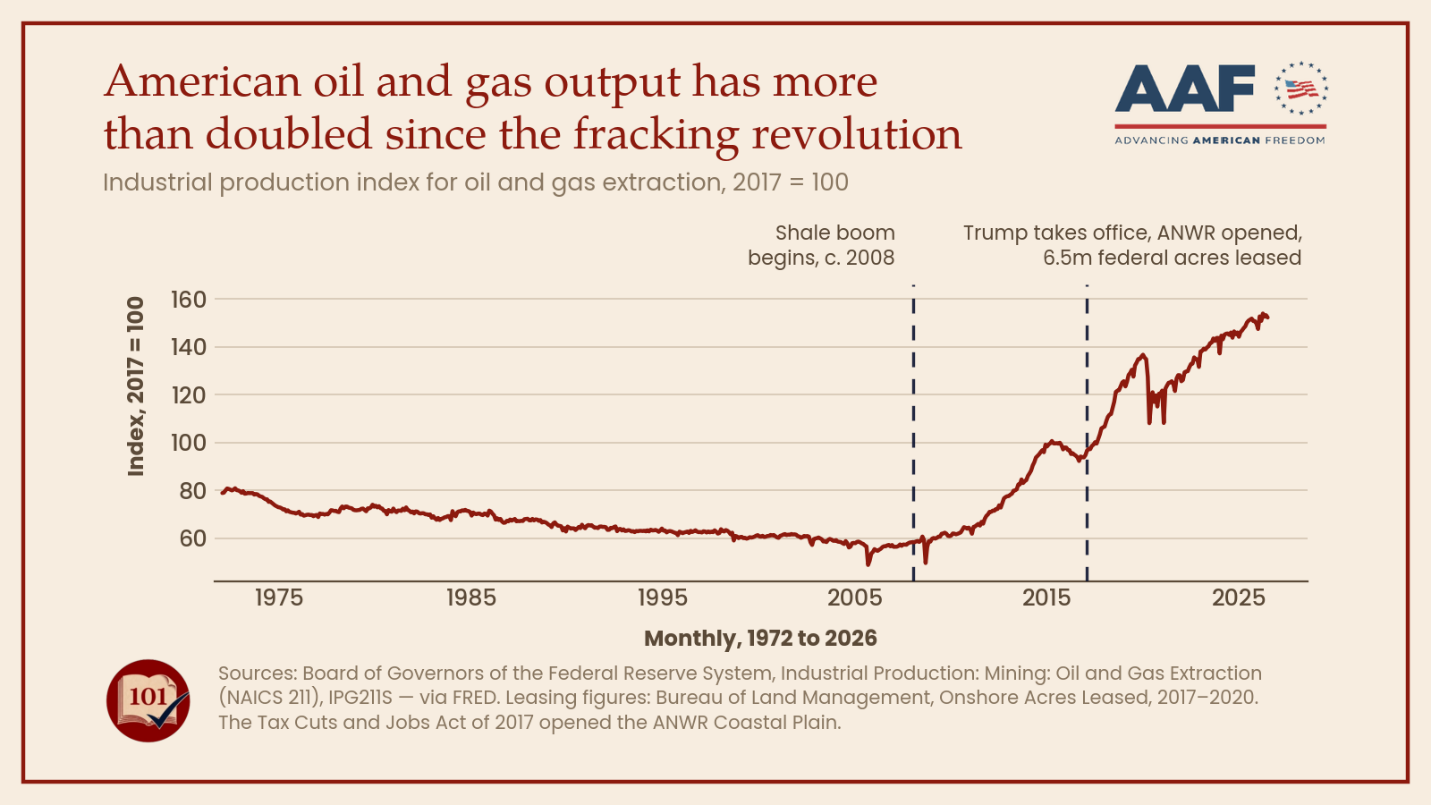
Federal and state policymakers should expand access to domestic oil and gas by establishing permanent lease-sale schedules and reducing unnecessary restrictions.
Austin Gae
Read memo »Memo 15 of 101
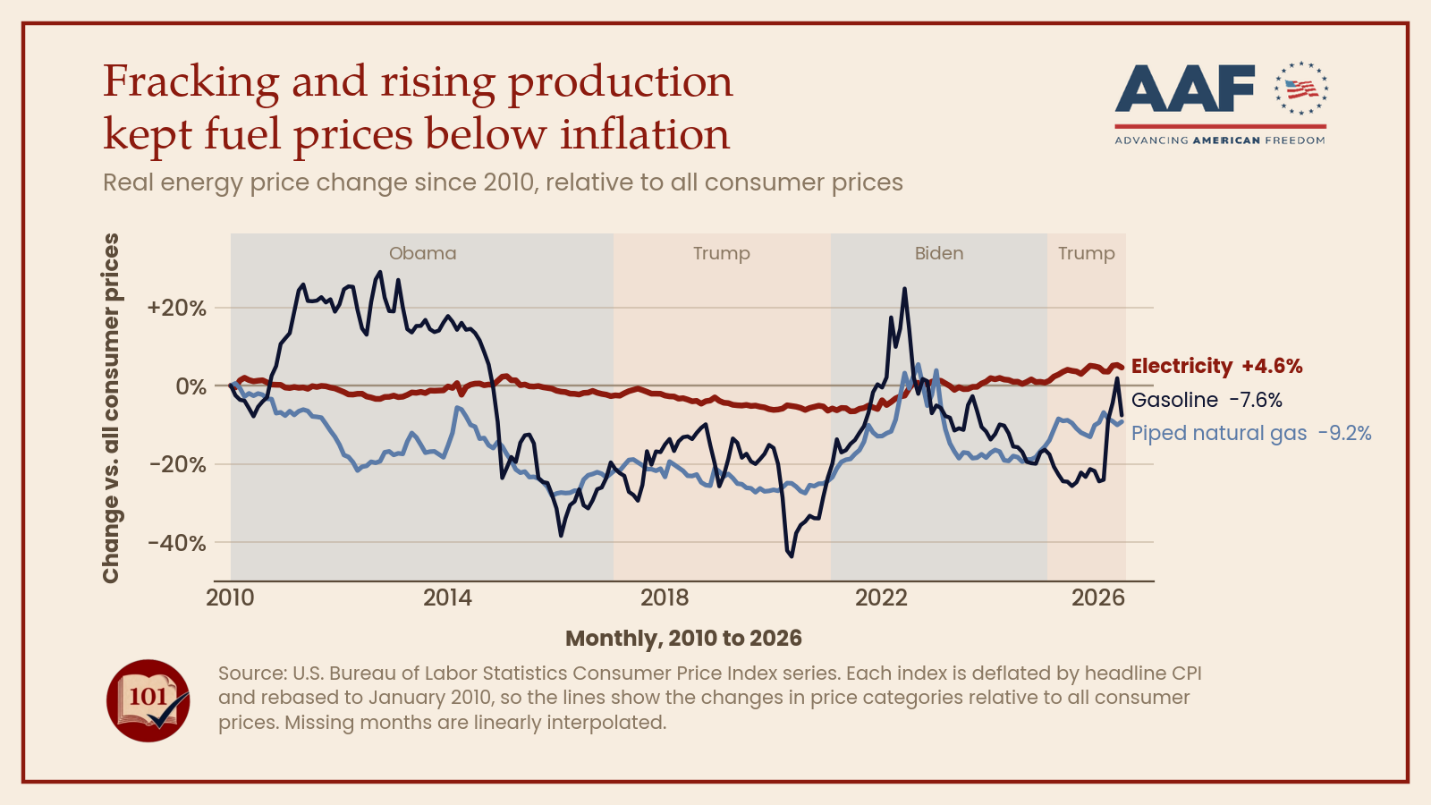
Lawmakers should repeal burdensome and unnecessary regulations and mandates that raise oil costs, and, in turn, the price of goods and services across the economy.
Austin Gae
Read memo »Memo 16 of 101
Lawmakers should reject all carbon taxes and cap-and-trade schemes.
Preston Brashers
Read memo »Memo 17 of 101
Lawmakers should repeal costly energy subsidies and mandates, which seek to dictate which forms of energy Americans must produce and use.
Austin Gae
Read memo »Memo 18 of 101
Lawmakers and nuclear regulators should keep cutting needless red tape so reliable, carbon-free nuclear power can be deployed more quickly and cheaply.
Austin Gae
Read memo »Memo 19 of 101
Officials should take proactive steps to reduce the share of America’s forests lost to wildfires, such as solidifying buffers from tall trees around utilities and creating strategic fuel breaks, while reducing barriers to harvesting timber.
Preston Brashers
Read memo »Memo 20 of 101
Lawmakers should reform the protracted permitting process to boost much-needed domestic production of critical minerals.
Austin Gae
Read memo »Chapter 3
14 memosFreedom to Work and Enterprise outlines ways to make government policy more conducive to work and enterprise, ensuring that the government doesn’t act as a gatekeeper telling workers and businesses whether they have permission to enter mutually beneficial arrangements or pursue new enterprises.
“[The] system must be replaced by one that restores incentive for the worker and for industry—a system that rewards initiative and effort and encourages thrift.”Ronald Reagan
Memo 21 of 101
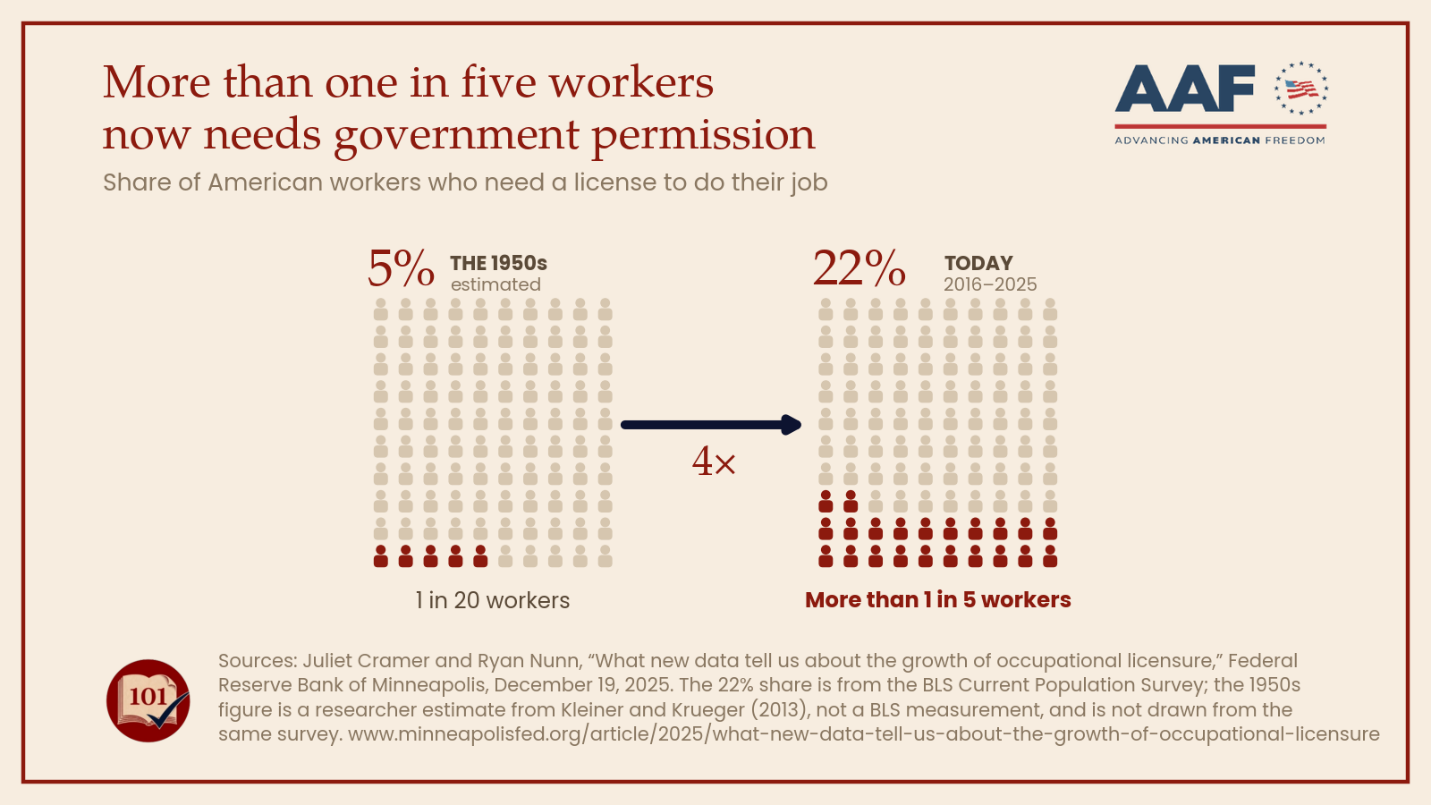
Policymakers should eliminate or relax licensure laws and other government-imposed barriers to entry that limit competition.
Rachel Greszler
Read memo »Memo 22 of 101
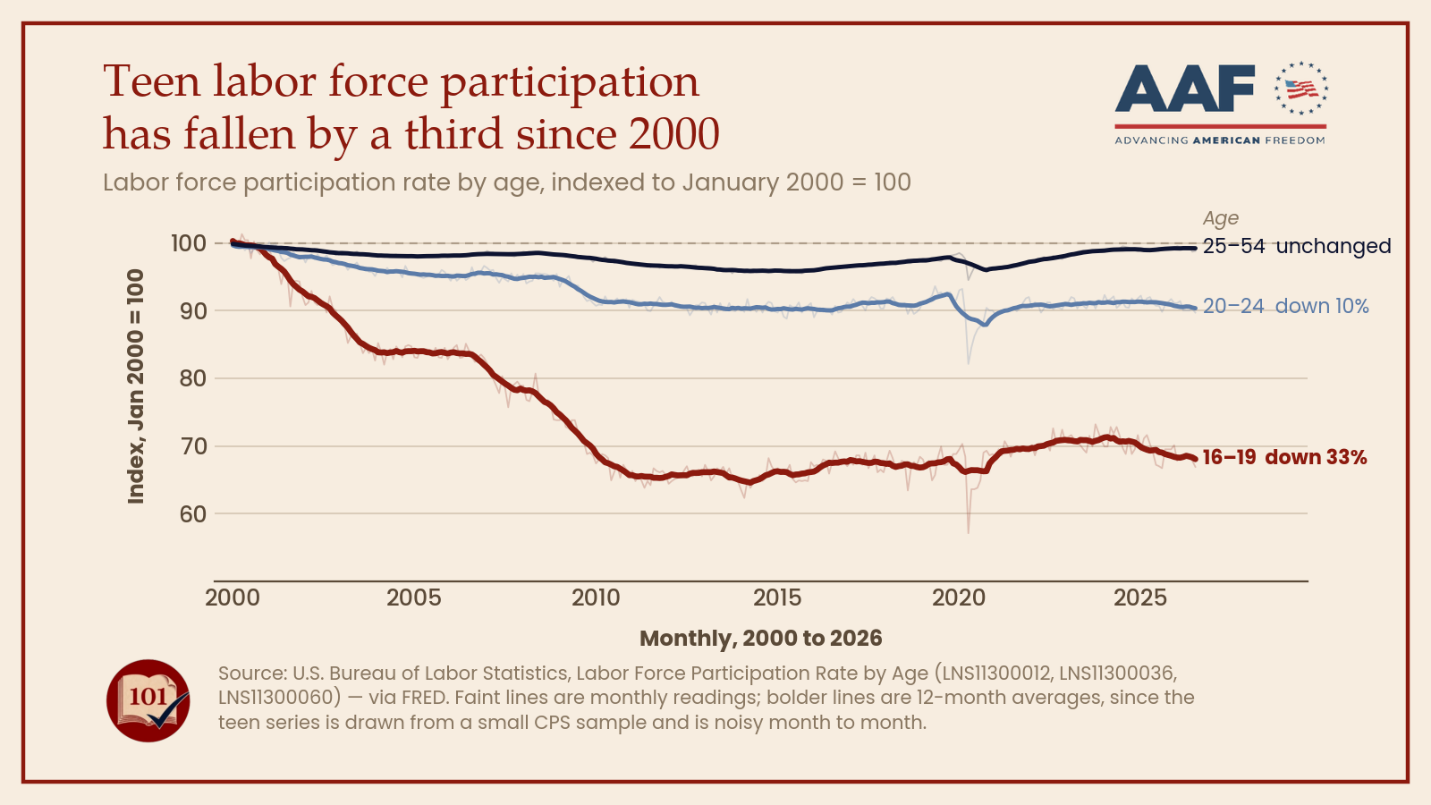
Lawmakers should avoid further increases in either the federal or state minimum wages, and state lawmakers should consider paring back recent increases or allowing sub-minimum wages for teens.
Rachel Greszler
Read memo »Memo 23 of 101
Congress and states should pass Right-to-Work laws, which prevent workers from being fired from their jobs for refusing to pay dues or fees to a labor union. This would force union officials to seek voluntary worker support and make it harder for them to make counterproductive contract demands.
Jace White
Read memo »Memo 24 of 101
Congress should eliminate Social Security’s Retirement Earnings Test, which functions like an additional 50% tax on some working Social Security recipients’ benefits, causing them to work and earn less than they would otherwise choose.
Rachel Greszler
Read memo »Memo 25 of 101
Policymakers should expand religious and conscience protections for care workers. Stronger, more consistent protections would attract and retain more religious and conscientious workers in the industry rather than force them out, expanding the labor force in critical sectors facing persistent shortages and rapid cost growth.
John Shelton
Read memo »Memo 26 of 101
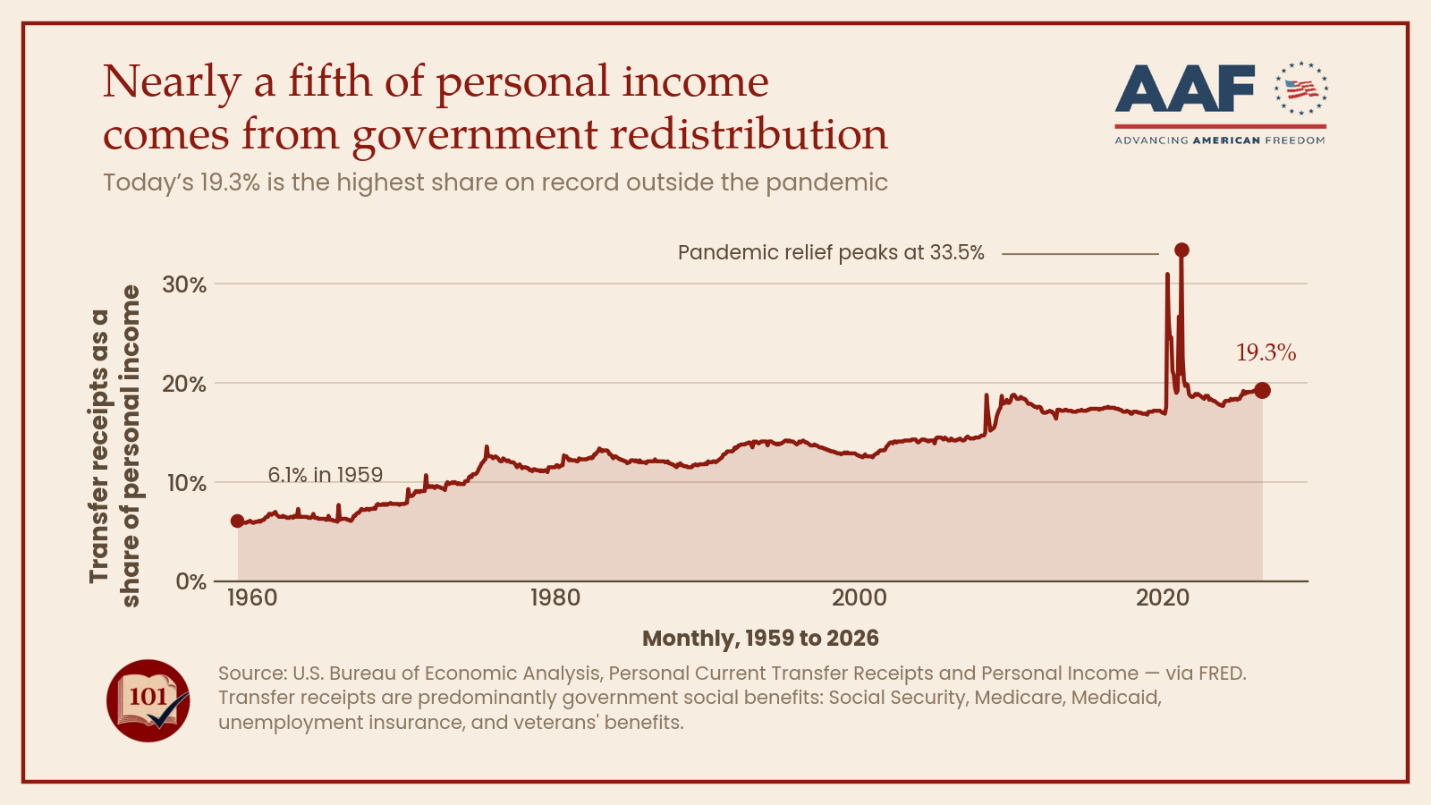
Welfare should be for those in need. Working families should not have to give up part of their paychecks to support idleness among able-bodied, working-age adults without dependents.
Rachel Greszler
Read memo »Memo 27 of 101
Apprenticeships should be freed from red tape and union protectionism so that they can expand into new occupations, providing more opportunities and higher incomes.
Rachel Greszler
Read memo »Memo 28 of 101
Policymakers should dismantle “disparate impact” laws and rules, which can require employers to justify employment practices like aptitude tests if they have different outcomes by race, sex, or other protected class.
Preston Brashers
Read memo »Memo 29 of 101
Congress should end regulatory flip-flopping and codify the rights of franchisees and small businesses to manage their employees and operations free from corporate control.
Rachel Greszler
Read memo »Memo 30 of 101
Lawmakers should protect entrepreneurship and independent work by codifying bright-line tests, consistent across all federal law, based on the level of control an individual exercises over their work.
Rachel Greszler
Read memo »Memo 31 of 101
Securities laws impede the ability of small and start-up businesses to raise the capital necessary to launch and grow.
David R. Burton
Read memo »Memo 32 of 101
State legislatures should address the growing physician shortage by allowing more qualified medical professionals to practice medicine.
Paul Larkin and Gadai Bulgac
Read memo »Memo 33 of 101
Overtime pay mandates can do more to limit flexibility and restrict output than they do to increase wages. Lawmakers should provide greater flexibility in overtime pay mandates to expand incomes and output.
Rachel Greszler
Read memo »Memo 34 of 101
The PAID program for unintentional paycheck errors would increase the amount and speed of payments returned to workers, while saving legal costs.
Rachel Greszler
Read memo »Chapter 4
11 memosFreedom to Build suggests policy solutions that would help reduce red tape, regulations, restrictions, ill-advised taxes, and other government-imposed barriers that stand in the way of quick and efficient construction of new homes, workplaces, hospitals, and infrastructure in the United States.
“But there remains the greatness of our people, our capacity for dreaming up fantastic deeds and bringing them off to the surprise of an unbelieving world.”Ronald Reagan
Memo 35 of 101
Congress should expand private landownership and the development of more affordable housing by requiring the Bureau of Land Management (BLM) and the U.S. Forest Service (USFS) to hold annual land sales.
Austin Gae
Read memo »Memo 36 of 101
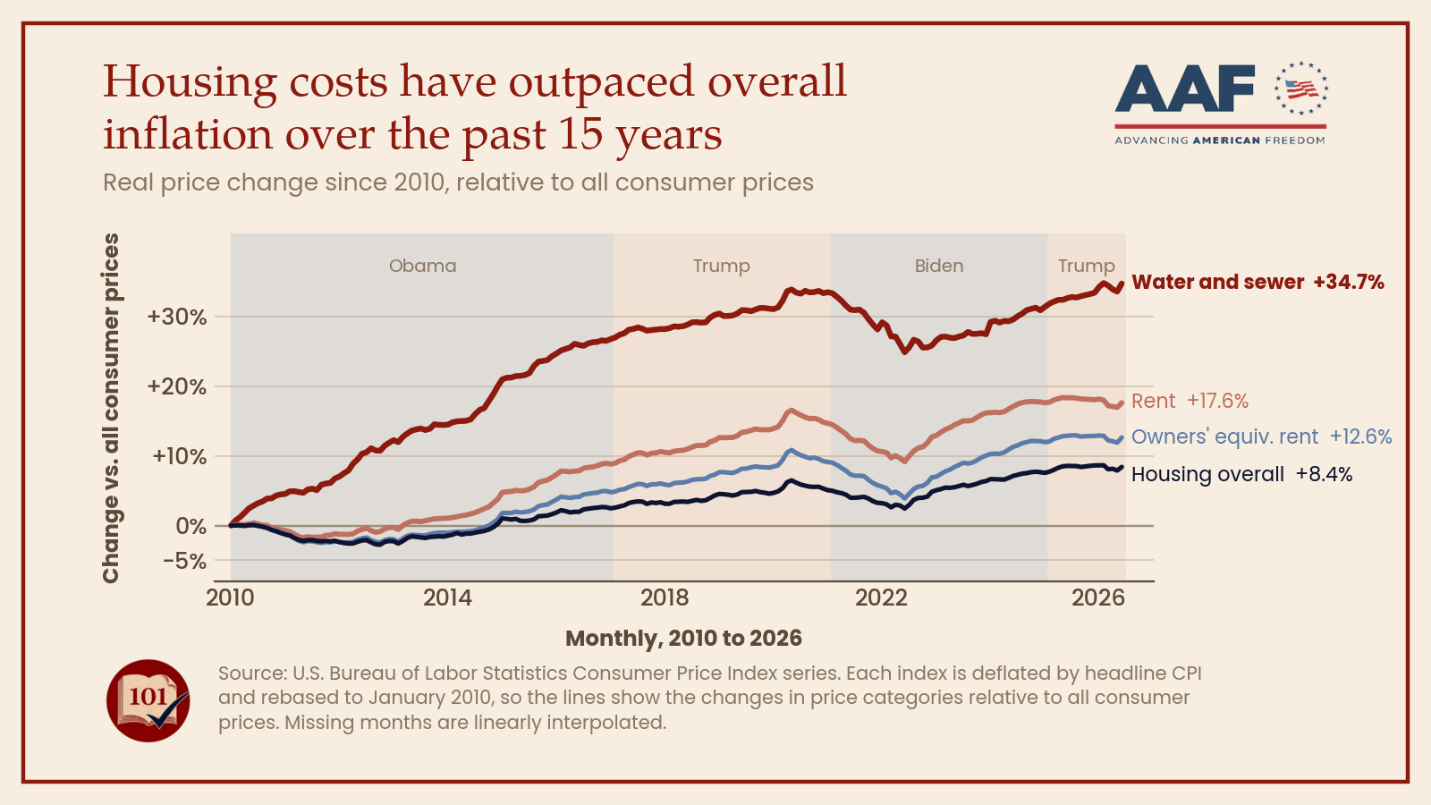
State and local zoning laws restrict housing supply and increase the cost of building homes.
David R. Burton
Read memo »Memo 37 of 101
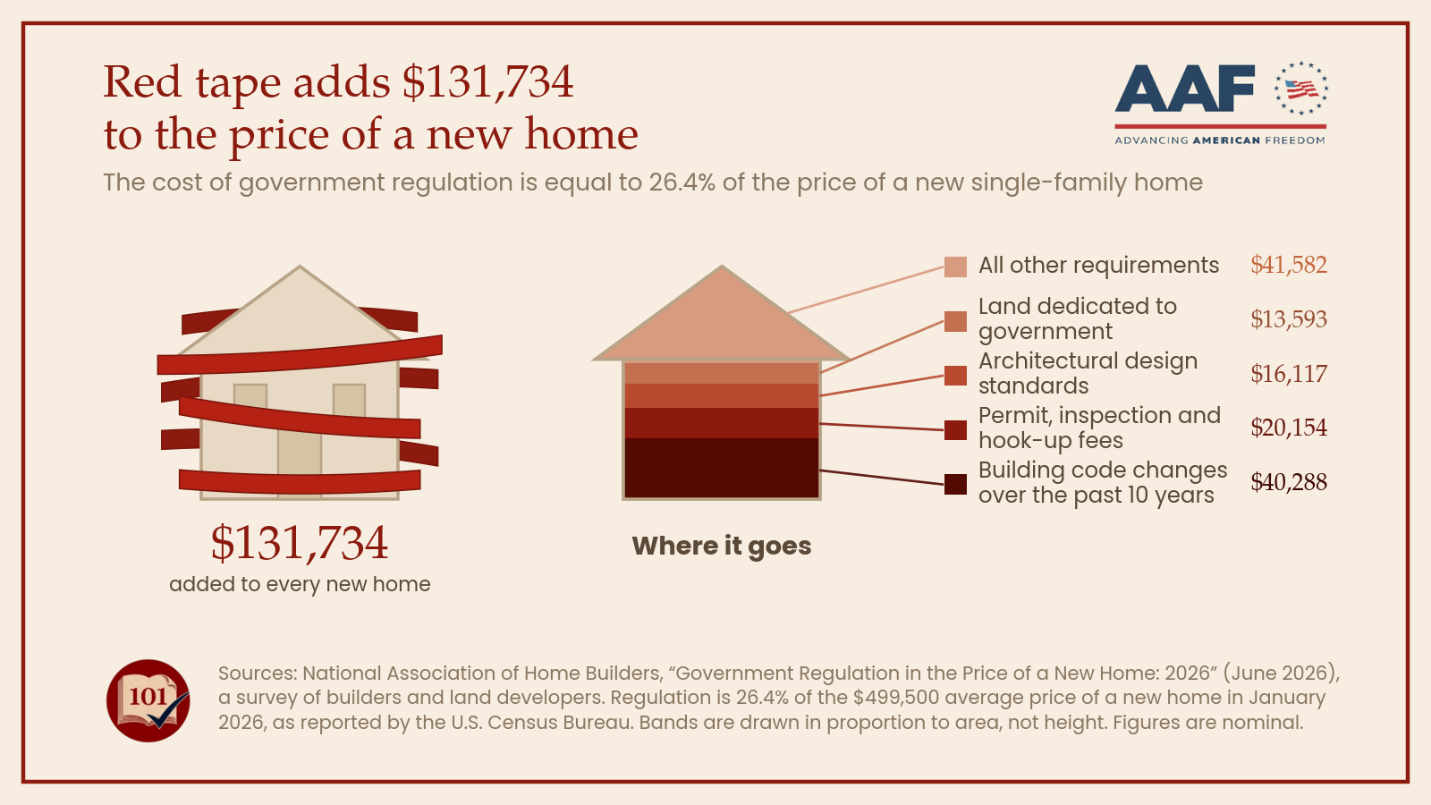
Burdensome building codes and mandatory green-certification requirements add to the costs of new homes. States should slow the cycle of required code updates, make green certifications voluntary, and prohibit federal energy-code overreach.
Joel Griffith
Read memo »Memo 38 of 101
Federal and state permitting rules cause large delays and expense on most major projects.
David R. Burton
Read memo »Memo 39 of 101
Rent control and eviction moratoria shrink the supply of rental housing, deter new construction and upkeep, and erode fundamental private property rights. Lawmakers at every level should reject these price and occupancy controls.
Joel Griffith
Read memo »Memo 40 of 101
Congress should facilitate more housing construction by allowing rental housing developers to fully expense construction costs when the property is made available for rent, instead of delaying deductions by up to 27.5 years, as under current law.
Preston Brashers
Read memo »Memo 41 of 101
Congress should allow full and immediate expensing for all commercial, industrial, and agricultural buildings, structures, and privately owned infrastructure.
Preston Brashers
Read memo »Memo 42 of 101
Repealing the Davis-Bacon Act would reduce construction costs, expand job and income opportunities, and ensure taxpayers receive more bang for their buck.
Rachel Greszler
Read memo »Memo 43 of 101
State lawmakers should end certificate of need (CON) requirements in health care that require hospitals and other health care providers to demonstrate a “need” to state authorities before obtaining permission to build or expand their facilities or offer new services or technologies.
David R. Burton
Read memo »Memo 44 of 101
Government contracts should be awarded through full and open competition so that taxpayers—not politically connected contractors—receive the best value.
Rachel Greszler
Read memo »Memo 45 of 101
By restricting competition, project labor agreements (PLAs) drive up costs, enable inefficiencies, and limit job opportunities.
Rachel Greszler
Read memo »Chapter 5
12 memosFreedom to Innovate and Compete discusses potential reforms to foster private innovation and competition with reforms that remove barriers to technological and medical innovation, privatize government enterprises, and place checks on the expansion of the regulatory state.
“Putting the market system to work for these objectives is an essential first step for their achievement. Additional multibillion dollar federal bureaus and programs are not the answer.”Ronald Reagan
Memo 46 of 101
Policymakers should fast-track approval of lifesaving drugs and medical devices that have been approved by trusted regulatory bodies of selected nations.
Preston Brashers
Read memo »Memo 47 of 101
Most-Favored-Nation policy won’t lower U.S. drug prices; it will restrict lifesaving and life-improving drug innovation, and it could increase U.S. dependence on Chinese drugs.
Rachel Greszler
Read memo »Memo 48 of 101
Lawmakers should reject data-center moratoria and remove regulatory barriers to the reliable, affordable energy needed to power America’s AI infrastructure.
Austin Gae and Richard Stern
Read memo »Memo 49 of 101
Congress should end the tax penalty against American companies that conduct research and development (R&D) outside the United States, except for in countries of concern like China.
Preston Brashers
Read memo »Memo 50 of 101
Most states require new vehicles to be sold through a franchised dealer. This middleman mandate adds an estimated $3,934 to $4,992 to the price of a typical new vehicle. States should legalize direct-to-consumer sales for all manufacturers, not just a select few.
Joel Griffith
Read memo »Memo 51 of 101
Federal law bars ranchers from selling beef harvested on their own land. Instead, every market animal must be trucked to an inspected plant. Congress should legalize onsite processing for in-state sales and use its Commerce Clause power to allow state-inspected meat to cross state lines.
Joel Griffith
Read memo »Memo 52 of 101
The federal government should not take equity stakes in companies and should divest its existing ownership stakes.
Preston Brashers
Read memo »Memo 53 of 101
The federal government should get out of the business of housing finance.
David R. Burton and Rachel Greszler
Read memo »Memo 54 of 101
The federal government should get out of the business of operating transportation and utility companies.
David R. Burton and Rachel Greszler
Read memo »Memo 55 of 101
Congress should commercialize America’s air traffic control (ATC) and the Transportation Security Administration (TSA) to make air travel more efficient and affordable.
Rachel Greszler
Read memo »Memo 56 of 101
Congress should codify and expand on the recent changes to judicial review made in Loper Bright Enterprises v. Raimondo that clarified that courts need not give deference to federal agencies’ interpretations of ambiguous statutes.
Preston Brashers
Read memo »Memo 57 of 101
Congress should reclaim its full, rightful constitutional authority to legislate by requiring that major federal rules receive congressional approval.
Preston Brashers
Read memo »Chapter 6
7 memosTax Reform outlines some of the economically destructive taxes imposed by federal, state, and local governments that should be eliminated or reduced, along with other potential pro-growth reforms.
“At the same time, the federal government has cynically told us that high taxes on business will in some way solve the problem and allow the average taxpayer to pay less. Well, business is not a taxpayer, it is a tax collector. Business has to pass its tax burden on to the customer as part of the cost of doing business.”Ronald Reagan
Memo 58 of 101
Congress should reform the tax code to ensure that full and immediate expensing is permanently allowed for all forms of business investment.
Preston Brashers
Read memo »Memo 59 of 101
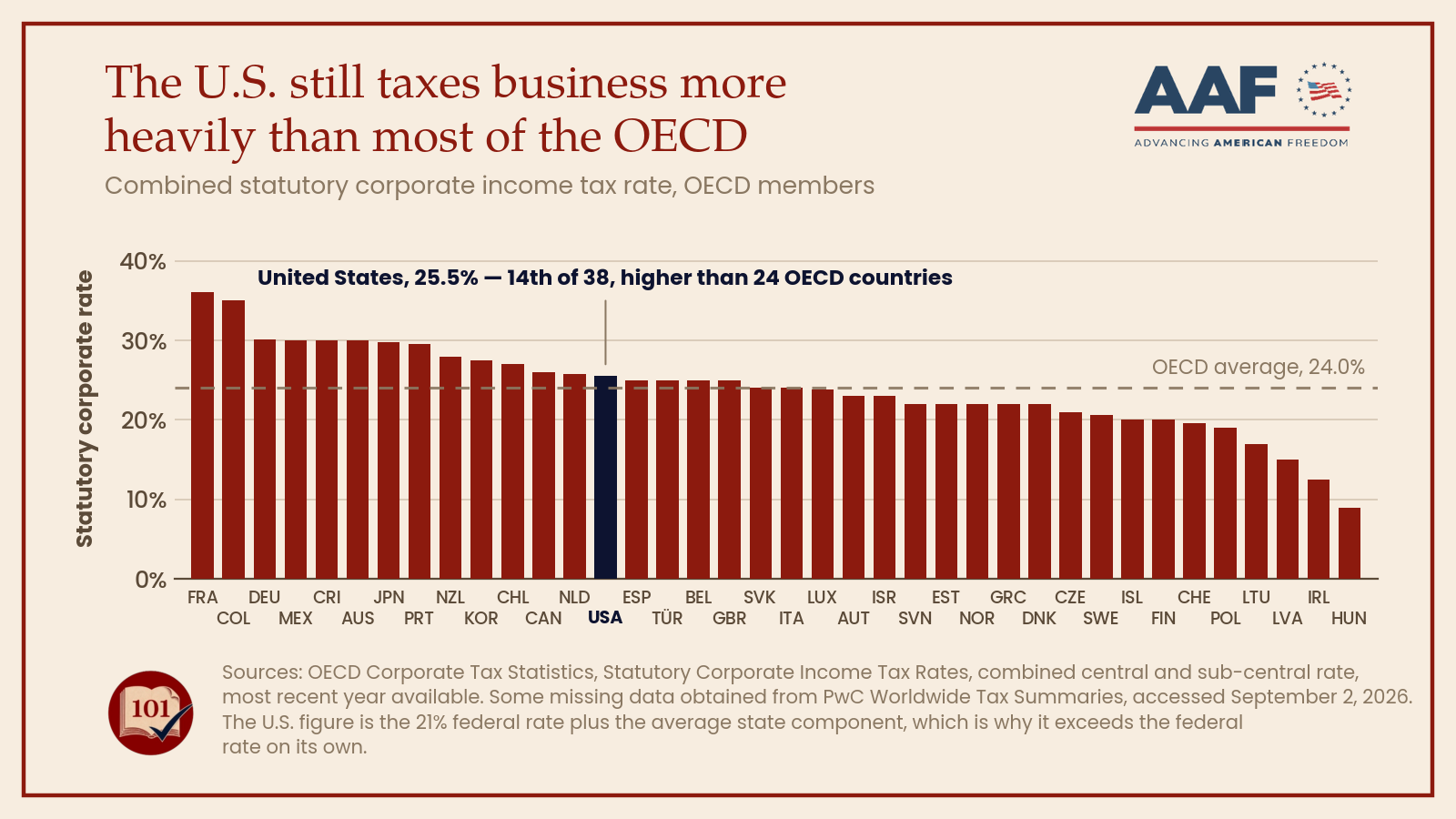
The federal corporate income tax rate should be reduced from 21% to 17%, along with other reforms to federal and state business taxes.
Preston Brashers
Read memo »Memo 60 of 101
Federal and state lawmakers should reduce capital gains taxes.
Preston Brashers
Read memo »Memo 61 of 101
Congress and state lawmakers should eliminate the death tax (including estate taxes, inheritance taxes, and gift taxes).
Preston Brashers
Read memo »Memo 62 of 101
Governments should rely less on taxes that are narrowly targeted at specific industries or products and should favor broad-based taxes instead.
Preston Brashers
Read memo »Memo 63 of 101
State lawmakers should reduce reliance on taxes with narrow or poorly defined tax bases and should avoid imposing too many taxes.
Preston Brashers
Read memo »Memo 64 of 101
Congress should pilot a distributed profits tax with shipbuilders, which would allow companies to freely reinvest their earnings without penalty.
Preston Brashers
Read memo »Chapter 7
6 memosFree Trade and Commerce focuses on ways to facilitate more commerce through the reduction or removal of tariffs and other artificial trade barriers with friendly nations and allowing more seamless commerce across the United States.
“A developing closeness between the United States, Canada and Mexico would [show] that we were prepared for a long haul, looking outward again and confident of our future; that together we are going to create jobs, to generate new fortunes of wealth for many, and provide a legacy for the children of each of our countries.”Ronald Reagan
Memo 65 of 101
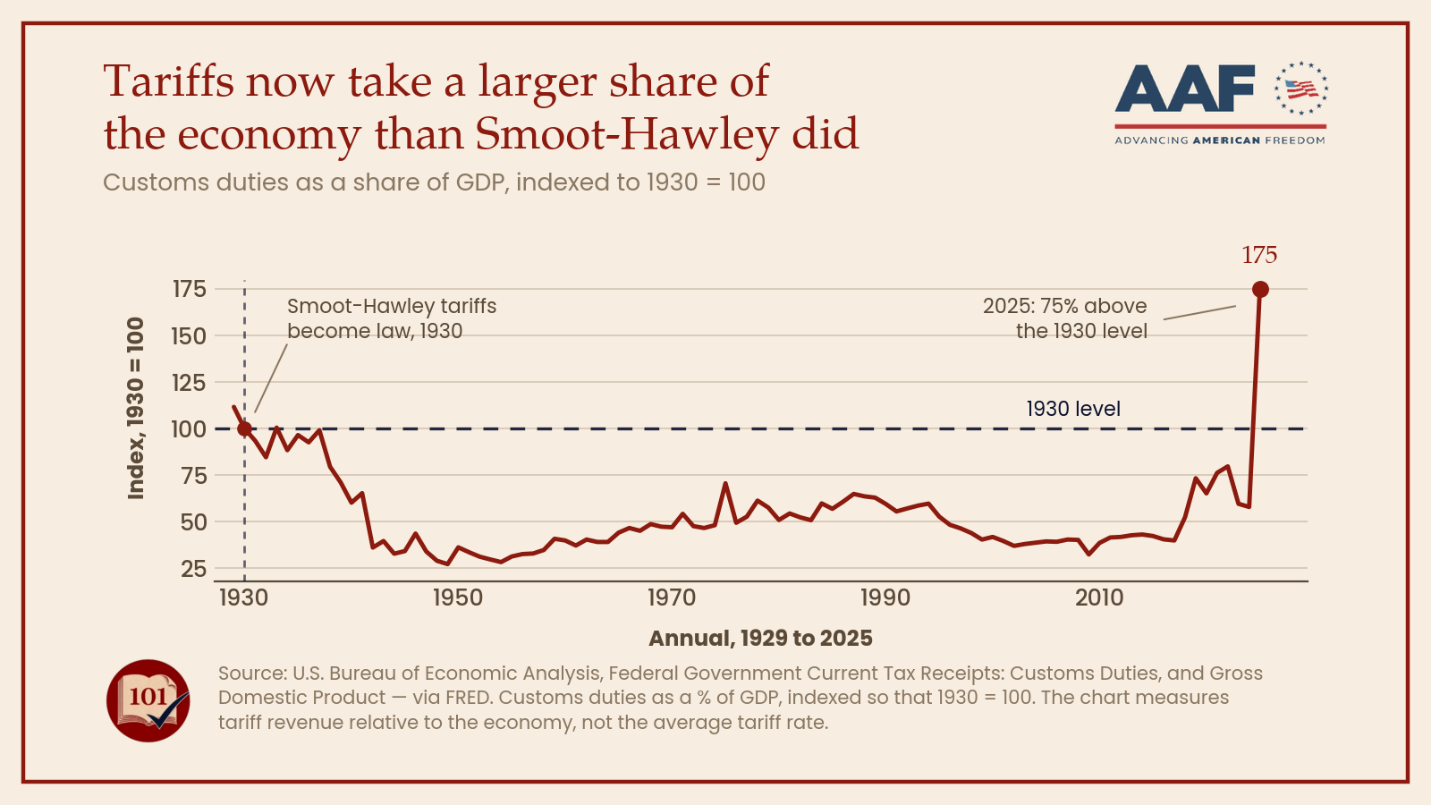
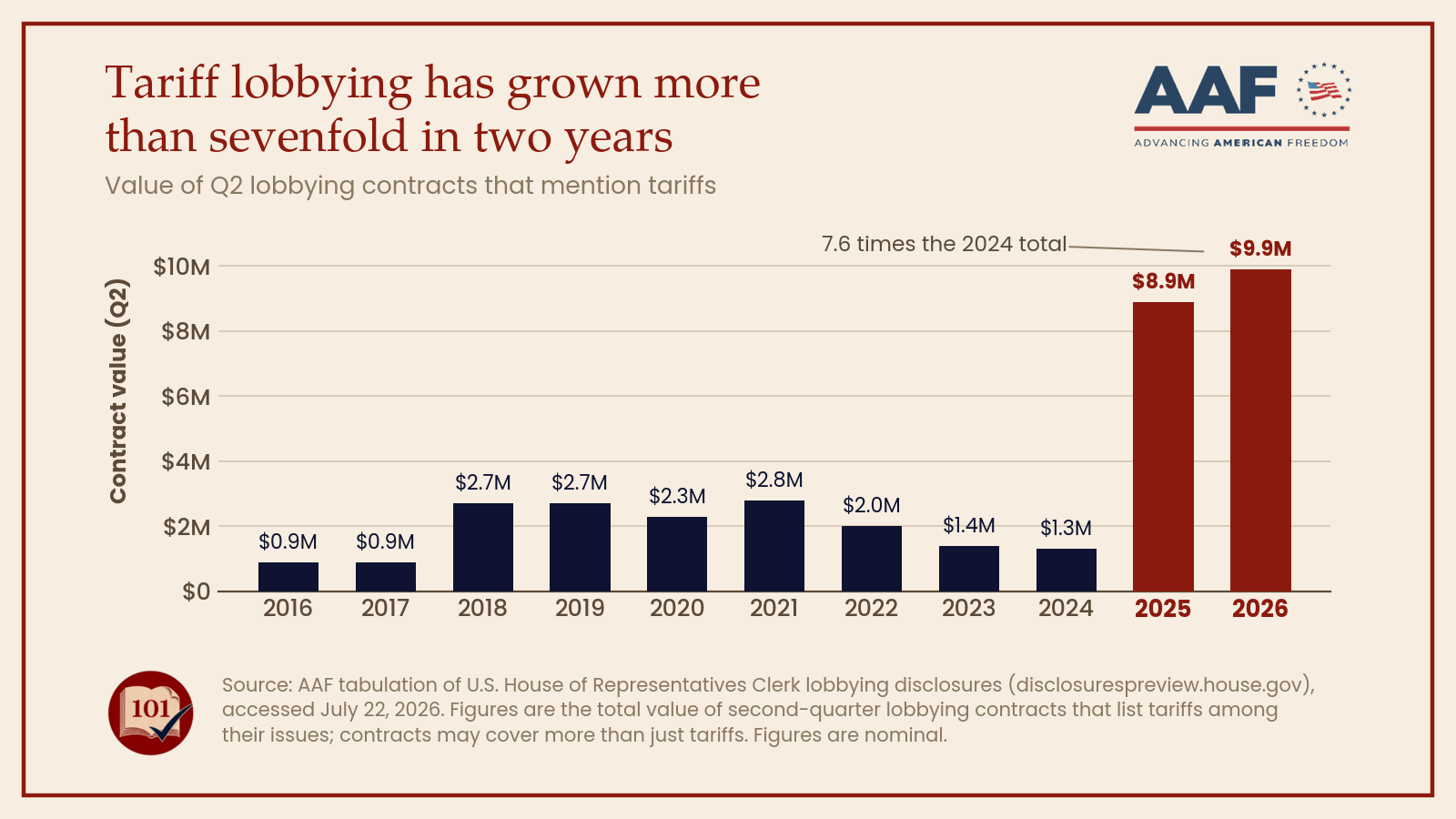
Congress should reclaim its exclusive constitutional authority over tariffs from the executive branch.
J. Marc Wheat
Read memo »Memo 66 of 101
Tariffs and other trade barriers on final consumer products imported from friendly nations should be reduced.
David R. Burton
Read memo »Memo 67 of 101
Tariffs and other trade barriers on business inputs imported from friendly nations should be removed, including those imposed on steel, aluminum, copper, lumber, machine tools, auto parts, semiconductors, energy, fertilizer, and chemicals.
David R. Burton
Read memo »Memo 68 of 101
The Jones Act has resulted in a tiny and dilapidated U.S. shipping fleet that drives up shipping and energy costs and limits domestic waterway transportation.
Rachel Greszler
Read memo »Memo 69 of 101
Laws requiring that dredging vessels operating in the U.S. be built in America and owned and crewed primarily by Americans should be changed to allow dredging by vessels from other friendly nations.
Preston Brashers
Read memo »Memo 70 of 101
The Surface Transportation Board (STB) should expedite the approval of the proposed merger of the Union Pacific Railroad (UP) and Norfolk Southern Railway (NS) to allow the creation of America’s first single-line coast-to-coast railroad.
Preston Brashers
Read memo »Chapter 8
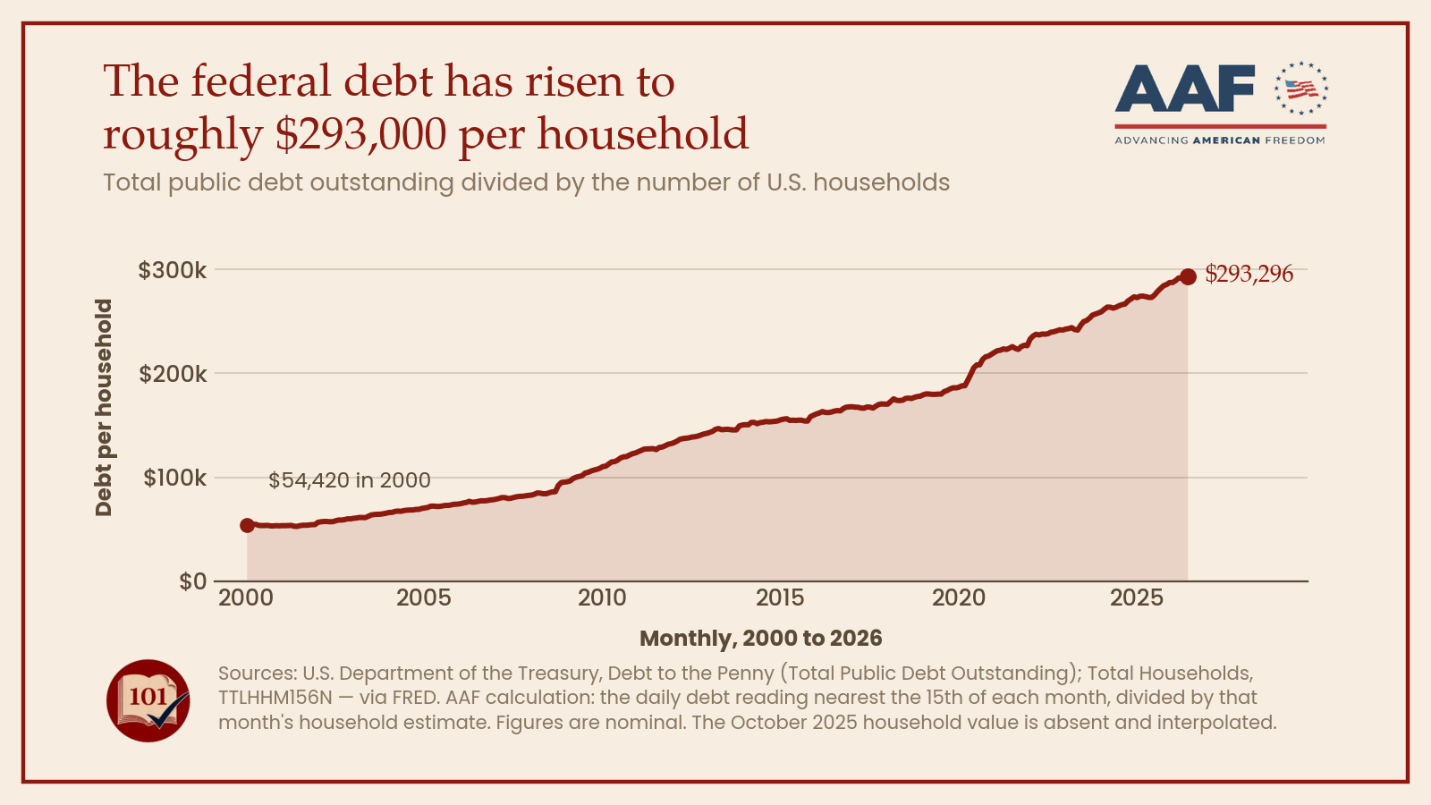
10 memosFiscal Restraint proposes major spending reforms to reverse the out-of-control growth of the federal deficit and limit borrowing to sustainable levels, which would ease pressure on the Federal Reserve to print money to finance new debt.
“The people have not created this disaster in our economy; the federal government has. It has overspent, overestimated, and overregulated. It has failed to deliver services within the revenues it should be allowed to raise from taxes.”Ronald Reagan
Memo 71 of 101
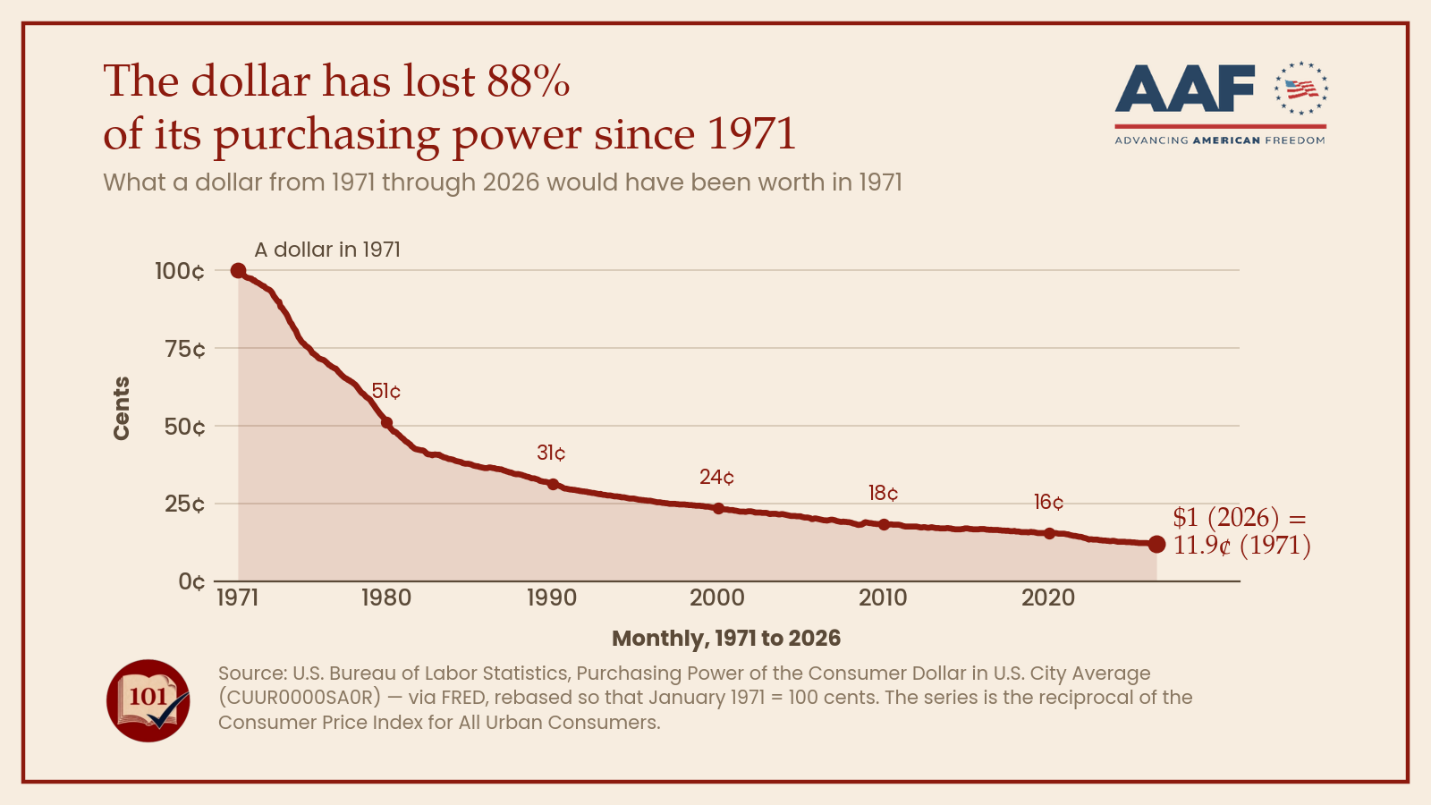
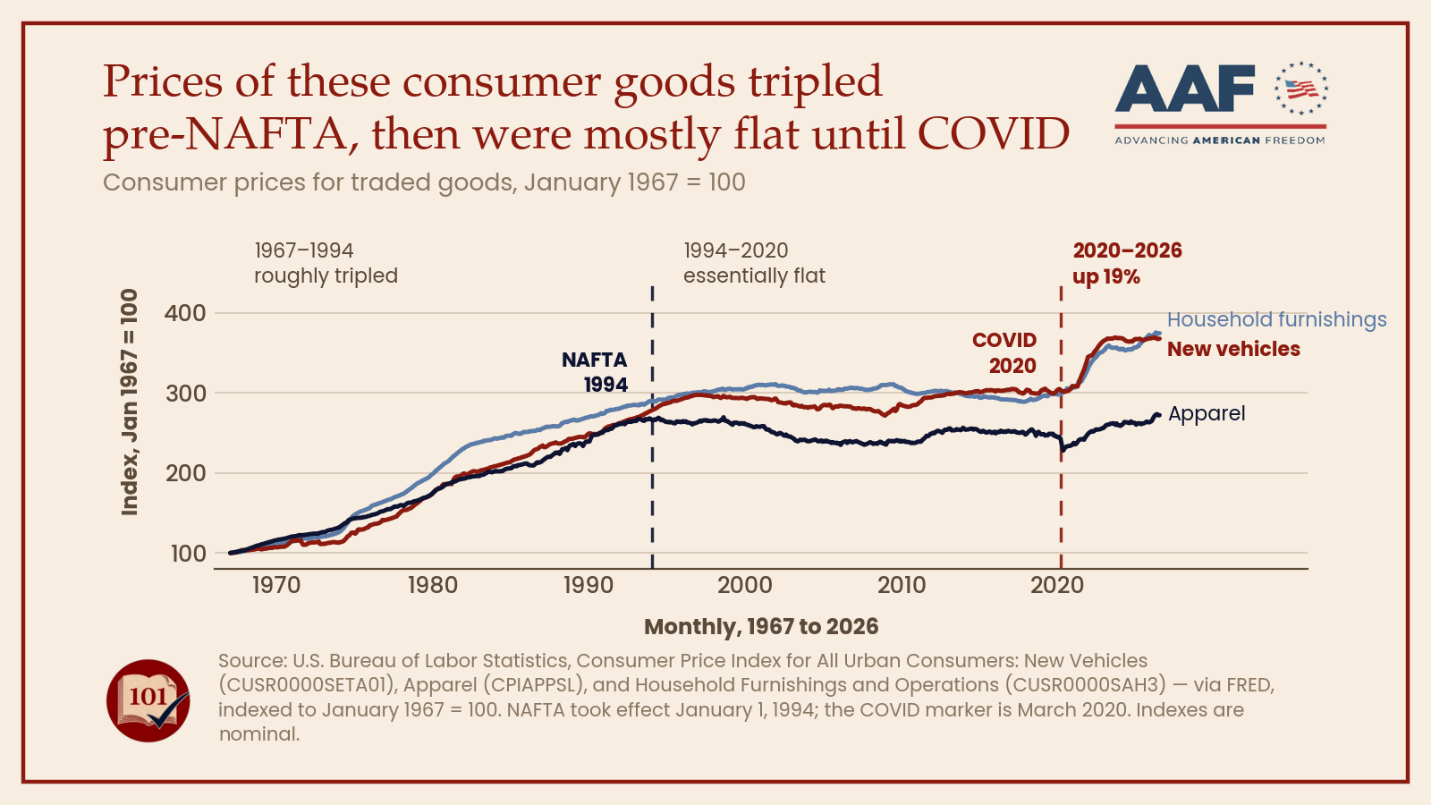
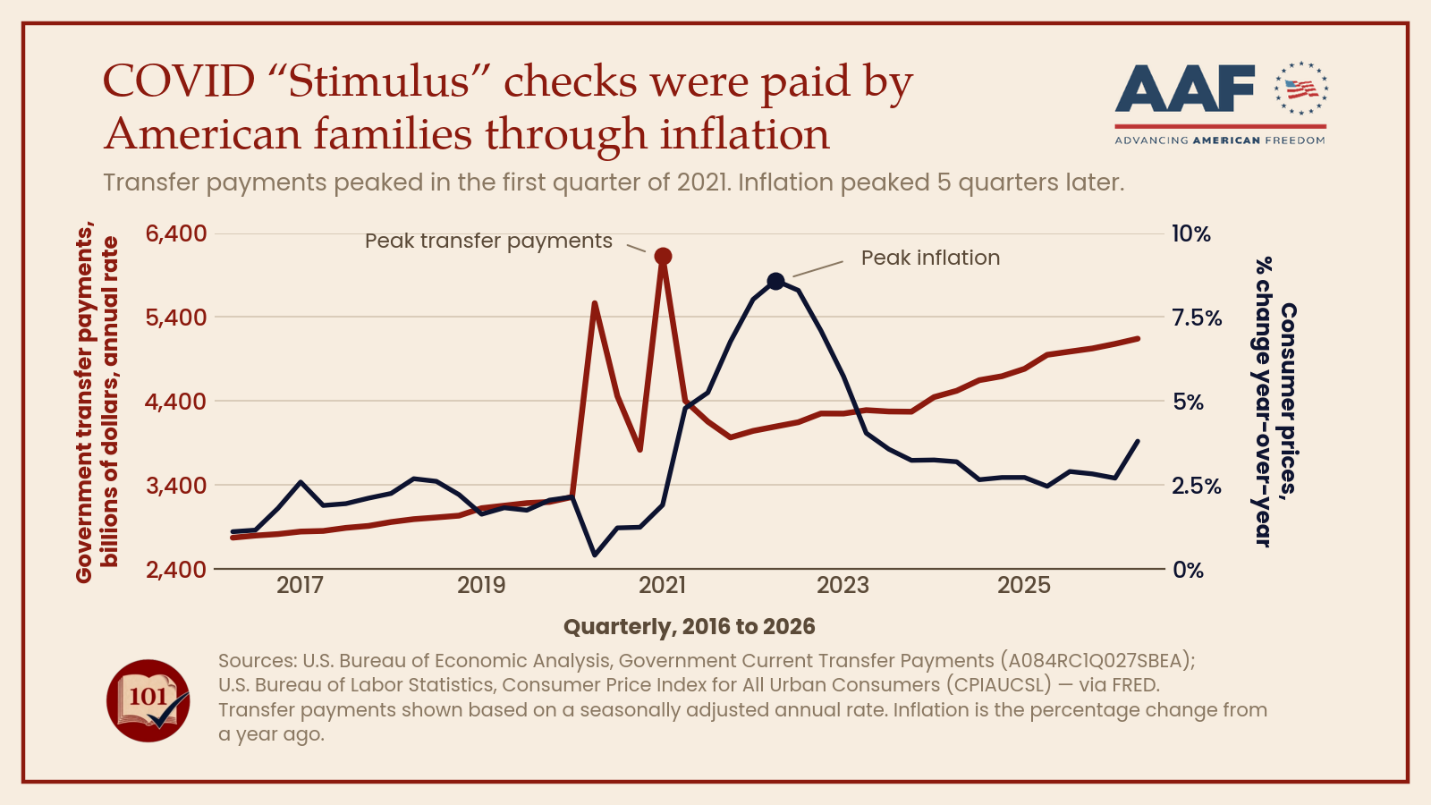
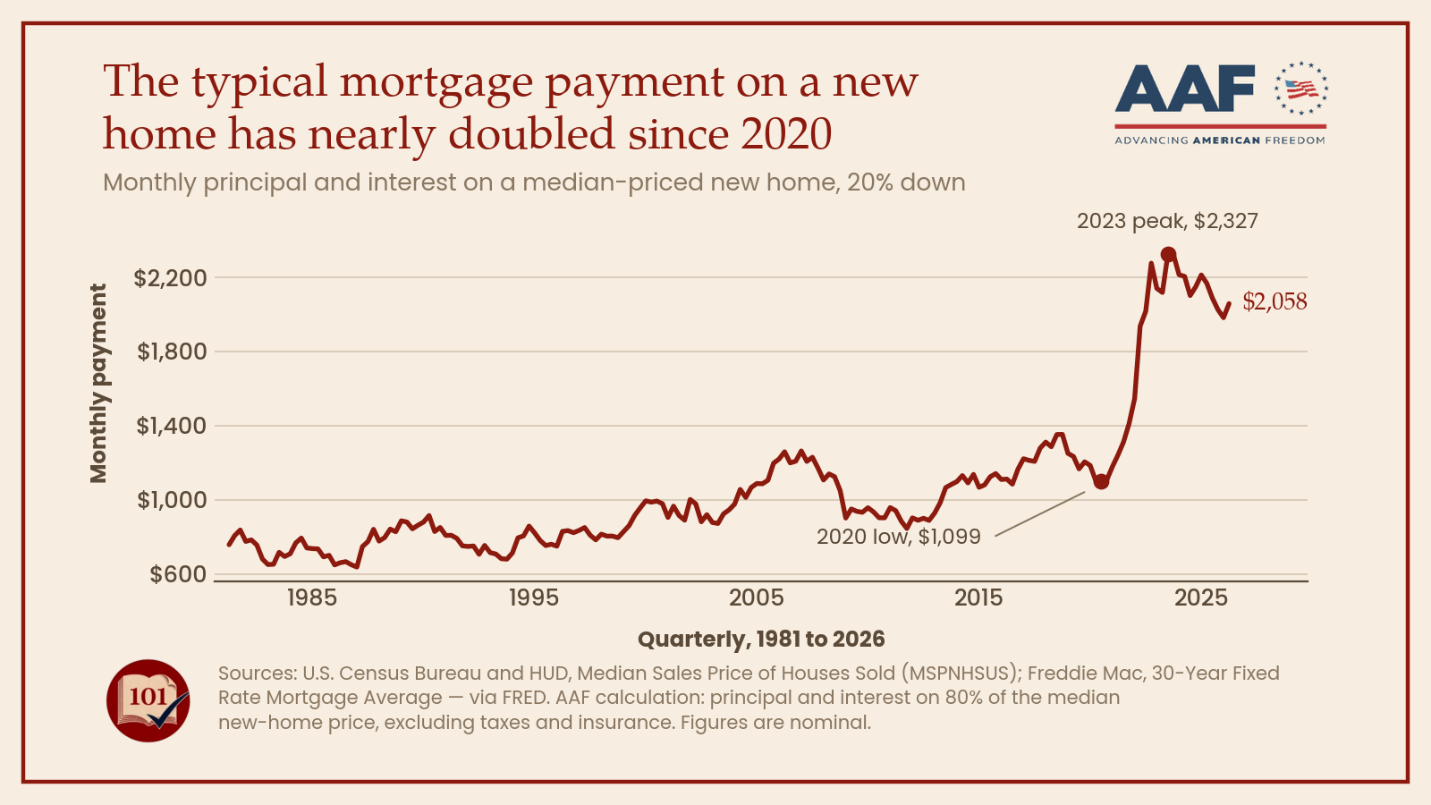
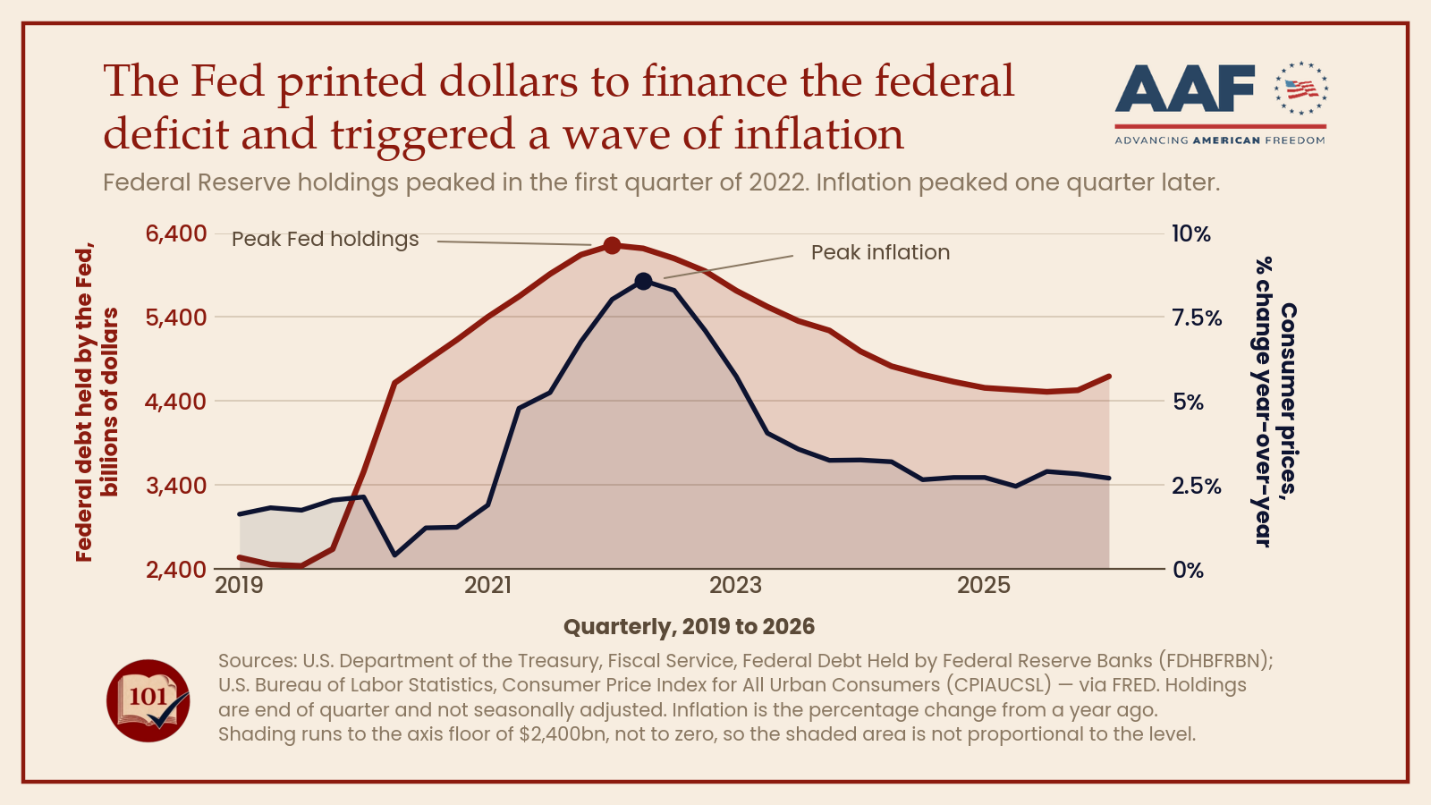
Out-of-control federal spending has driven the Fed to rapidly grow the money supply to accommodate deficits, which, in turn, has driven persistent inflation.
Preston Brashers
Read memo »Memo 72 of 101
Congress should enact comprehensive Social Security Reform to avoid large-scale tax increases, benefit cuts to those most in need, and a painful fiscal crisis.
Rachel Greszler
Read memo »Memo 73 of 101
Social Security is not retirement savings because 100% of workers’ taxes go immediately to retirees’ benefits. Today’s workers should have the opportunity to build personal retirement savings that they own and can pass on to their heirs.
Rachel Greszler
Read memo »Memo 74 of 101
The Medicare trust fund is on track to become insolvent in 2033. Major reforms are needed to avoid insolvency while also improving health care affordability.
Gadai Bulgac
Read memo »Memo 75 of 101
Congress should convert appropriate mandatory programs to discretionary spending and require regular reauthorization so that more of the budget faces regular congressional scrutiny in the appropriations process.
Preston Brashers
Read memo »Memo 76 of 101
Lawmakers should restore most welfare programs to the states, which are better equipped and better incentivized to responsibly, effectively, and cost-consciously manage welfare services.
Rachel Greszler
Read memo »Memo 77 of 101
The federal government should fund the same amount of Medicaid costs for similar populations whether they live in Maine, Texas, or California.
Rachel Greszler
Read memo »Memo 78 of 101
Lawmakers should shift Social Security’s Disability Insurance (SSDI) program to a flat benefit, essentially eliminating poverty among SSDI beneficiaries and reducing payroll taxes for workers.
Rachel Greszler
Read memo »Memo 79 of 101
The Social Security Disability Insurance (SSDI) program doesn’t serve individuals with disabilities or taxpayers well. There should be a private alternative.
Rachel Greszler
Read memo »Memo 80 of 101
The baseline assumptions of Congress’s scorekeepers: the Congressional Budget Office (CBO) and the Joint Committee on Taxation (JCT) favor spending growth and disfavor tax cuts. These biases should be eliminated.
Preston Brashers and Zachary Cady, Ph.D.
Read memo »Chapter 9
9 memosSound Money and Capital Freedom describes policy changes that would support a sound dollar and more efficient capital allocation by limiting the Federal Reserve’s discretion to expand the money supply and allowing a freer flow of private capital.
“In the 34 years since the end of World War II, the federal government has spent 448 billion dollars more than it has collected in taxes—448 billion dollars of printing press money, which has made every dollar you earn worth less and less.”Ronald Reagan
Memo 81 of 101
The Federal Reserve should follow a transparent, rules-based framework like the Taylor Rule to anchor inflation expectations, protect wages and savings from erosion, and facilitate long-term economic planning.
Joel Griffith
Read memo »Memo 82 of 101
Congress should permanently prohibit the Federal Reserve from creating a central bank digital currency (CBDC). A CBDC could concentrate credit allocation in the hands of the central bank and replicate the financial-surveillance model of the Chinese Communist Party (CCP).
Joel Griffith
Read memo »Memo 83 of 101
The Federal Reserve’s balance sheet should be limited to short-term Treasuries to prevent the Fed from steering credit to prop up politically favored sectors such as housing, corporate debt, or equities.
Joel Griffith
Read memo »Memo 84 of 101
Congress should repeal or reform the ill-advised provisions of the Dodd-Frank Act.
David R. Burton
Read memo »Memo 85 of 101
Congress should enact legislation allowing for the creation of flexible Universal Savings Accounts (USAs).
Preston Brashers
Read memo »Memo 86 of 101
Proposed caps on credit card interest rates are price controls on credit. Like all price controls, they would create shortages, drying up credit for the very families they are meant to help and pushing desperate borrowers toward predatory lenders.
Joel Griffith
Read memo »Memo 87 of 101
DEI and ESG are racist and economically destructive.
David R. Burton
Read memo »Memo 88 of 101
FINRA’s regulatory responsibilities should be moved to the SEC. Otherwise, Congress and the SEC need to substantially reform FINRA.
David R. Burton
Read memo »Memo 89 of 101
Congress should phase out the federal tax exclusion for interest income from state and local bonds.
Preston Brashers
Read memo »Chapter 10
12 memosAccountability and Oversight outlines reforms that would reduce waste, fraud, and abuse in federal programs and help ensure that taxpayer dollars are spent responsibly.
“We must force the entire federal bureaucracy to live in the real world of reduced spending, streamlined functions and accountability to the people it serves. We must review the functions of the federal government to determine which of those are the proper province of levels of government closer to the people.”Ronald Reagan
Memo 90 of 101
Cracking down on hundreds of billions of dollars in fraud and improper payments requires a full accounting of federal benefits.
Rachel Greszler
Read memo »Memo 91 of 101
Congress should close and consolidate federal offices or reduce or eliminate their appropriations to limit questionable federal functions.
Preston Brashers
Read memo »Memo 92 of 101
Taxpayers deserve a full and accurate accounting of how much of their hard-earned tax dollars the federal government spends on improper payments.
Rachel Greszler
Read memo »Memo 93 of 101
Under the current Medicare system, the government often pays hospitals more than twice what it pays independent physician offices for comparable outpatient services. Congress should make payments the same across the board.
Gadai Bulgac
Read memo »Memo 94 of 101
Lawmakers should eliminate Medicaid provider taxes, which amount to legal money laundering of tens of billions of dollars annually by states at the expense of federal taxpayers.
Rachel Greszler
Read memo »Memo 95 of 101
States—not federal taxpayers—should have to pay when they issue improper payments and enable fraud.
Rachel Greszler
Read memo »Memo 96 of 101
The federal government shouldn’t pay states more for able-bodied, working age adults enrolled in Medicaid than it pays for traditional enrollees—children, pregnant women, the disabled, and low-income seniors.
Rachel Greszler
Read memo »Memo 97 of 101
Congress should eliminate the Broad-Based Categorical Eligibility (BBCE) loophole that allows millions of otherwise ineligible people to qualify for welfare.
Rachel Greszler
Read memo »Memo 98 of 101
Obamacare should be reformed to promote competition, enhance federalism, crack down on fraud, and increase incentives to control costs.
Preston Brashers
Read memo »Memo 99 of 101
Congress should limit welfare to those in need instead of forcing taxpayers to subsidize ordinary expenses for nearly a third of the population.
Rachel Greszler
Read memo »Memo 100 of 101
Unintended use of Social Security’s Disability Insurance (SSDI) program increases payroll taxes and restricts income and output by reducing the workforce.
Rachel Greszler
Read memo »Memo 101 of 101
Welfare should help Americans achieve work and upward mobility—not trap them in a web of complicated and often conflicting welfare programs.
Rachel Greszler
Read memo »Affordability 101
Preston BrashersResearch FellowPlymouth Institute for Free Enterprise
Gadai BulgacPolicy AnalystInstitute for Statistical Policy Analysis
David R. BurtonSenior Fellow in Economic PolicyPlymouth Institute for Free Enterprise
Zachary Cady, Ph.D.Senior EconomistInstitute for Statistical Policy Analysis
Austin GaePolicy AnalystPlymouth Institute for Free Enterprise
Rachel GreszlerSenior Research FellowPlymouth Institute for Free Enterprise
Joel GriffithSenior Research FellowPlymouth Institute for Free Enterprise
Paul LarkinSenior Legal FellowThe Edwin Meese III Institute for the Rule of Law
John SheltonVice PresidentPolicy Department
Richard SternVice PresidentPlymouth Institute for Free Enterprise
J. Marc WheatGeneral CounselLegal Department
Jace WhiteManager, Government RelationsPolicy DepartmentAffordability 101 also benefited from invaluable contributions from:
Madeline AlfonsoDigital AssistantSDStuart Deery
A.J. DieterlePolicy Assistant
Davison DrummResearch AssistantZHZechariah Hall
Timothy HarperDirector of Constitutional Studies
Julia JensenPress Assistant
Kat MillerPolicy Analyst
John PelusoPolicy Analyst
Hans von SpakovskySenior Legal Fellow
Jonah WendtCommunications Director