
Policy Memo
Topline
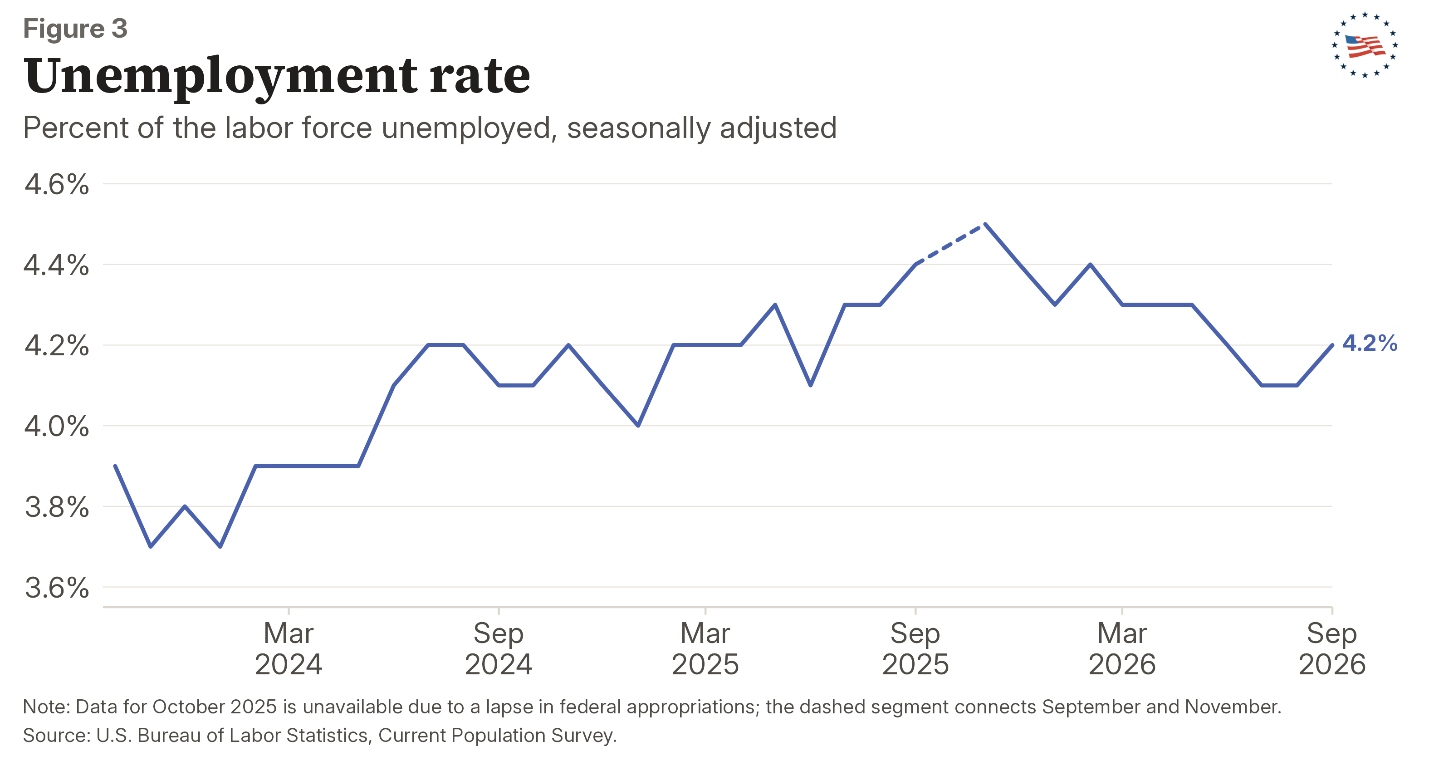
Payroll employment increased by 29,000 jobs in September, while the unemployment rate ticked up to 4.2 percent.
Institute for Statistical Policy Analysis · Plymouth Institute for Free Enterprise
TOPLINE: Payroll employment increased by 29,000 jobs in September, while the unemployment rate ticked up to 4.2 percent.
BACKGROUND: After a modestly strong month of growth in August, September’s jobs numbers are much more reminiscent of the tepid growth the economy experienced last year under the Liberation Day tariffs. Total non-farm job growth is estimated to be just 29,000 jobs, which is not a statistically significant gain, as Figure 1 demonstrates.1 The previous two months of job gains for July and August were both revised downward, by 31,000 and 29,000 jobs respectively, to –10,000 jobs and +133,000 gained or lost.
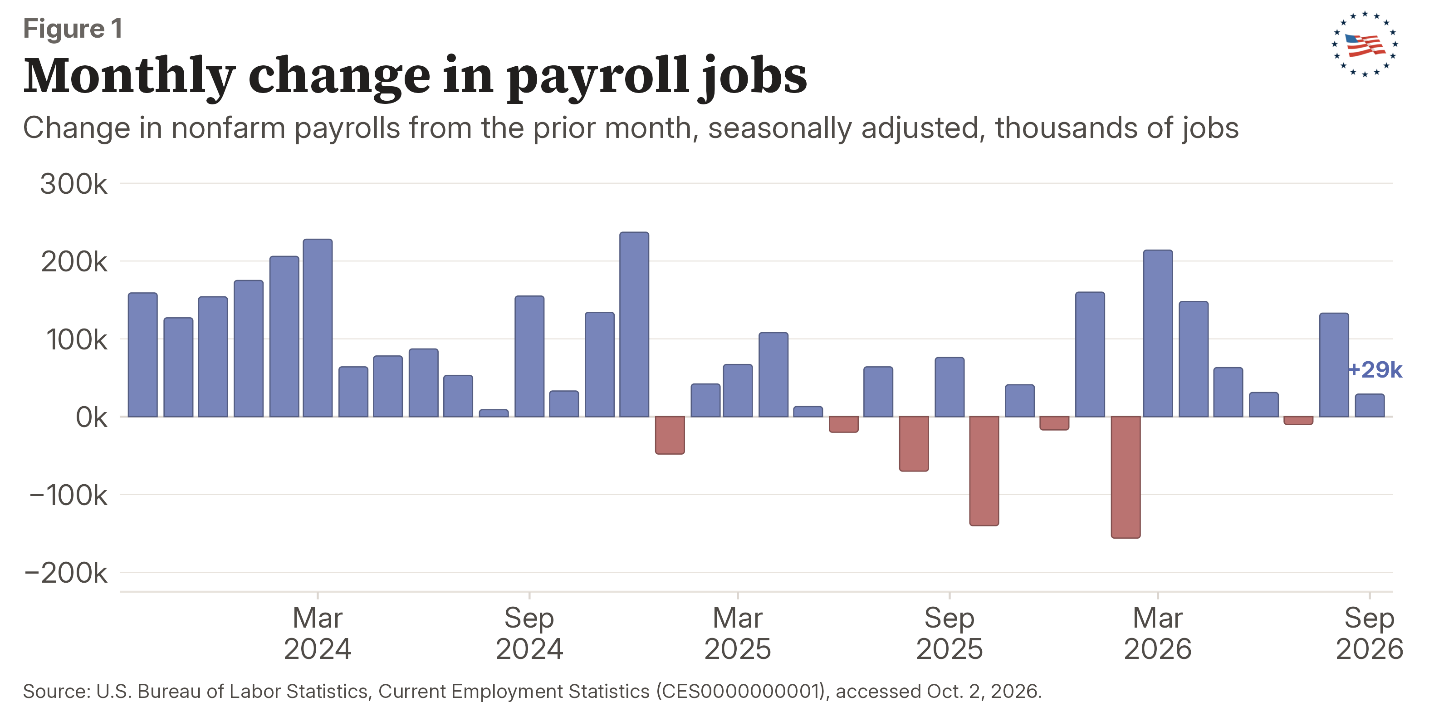
Total private employment grew by 46,000 this month, which is also not a statistically significant increase. No supersectors (such as information, mining and logging, or leisure and hospitality) experienced statistically significant increases or declines in employment in the past month. Over a 3-month period, only private education and health services, manufacturing, construction, and utilities supersectors have seen somewhat notable growth.
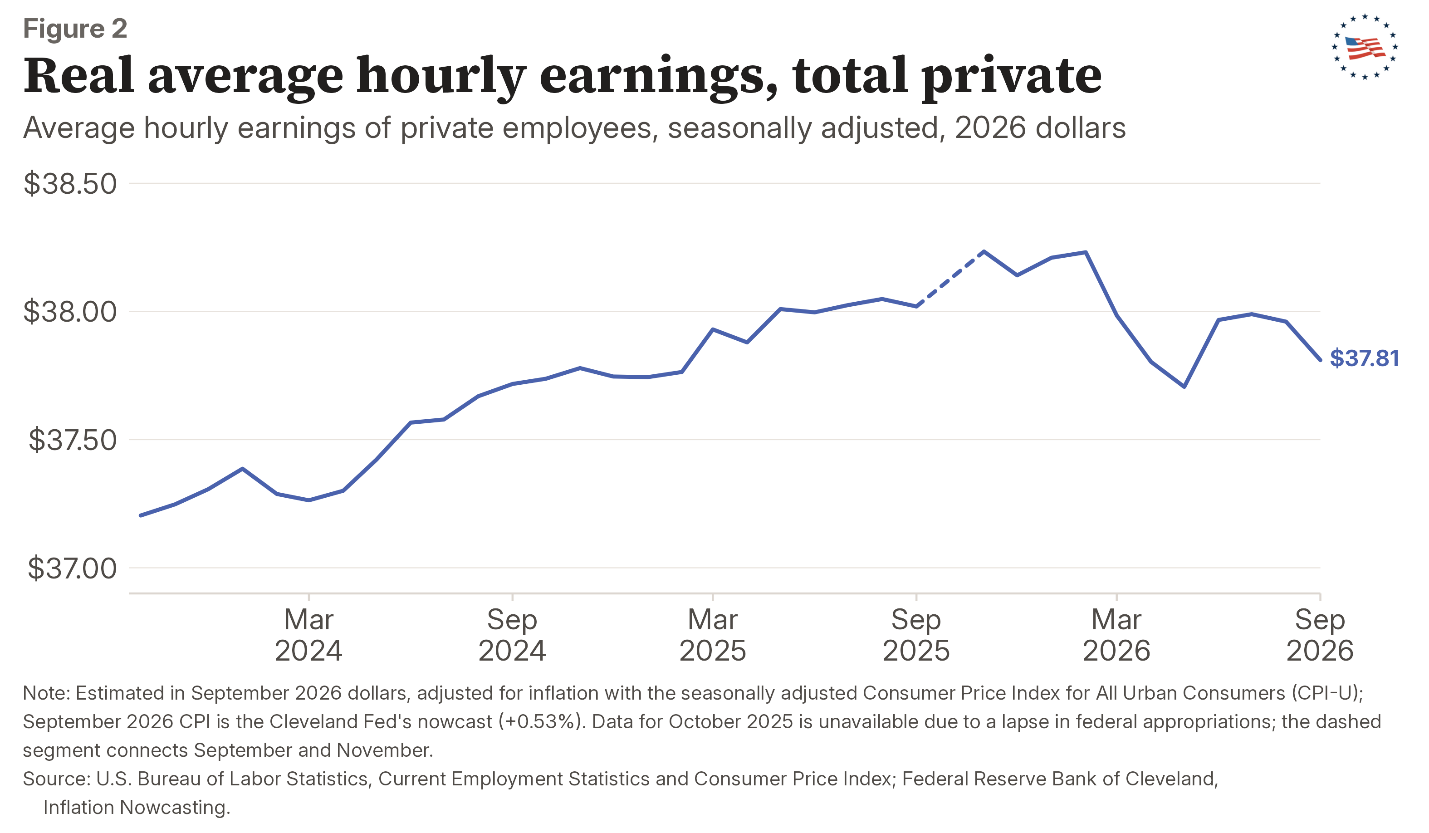
Another concerning sign is that average hourly earnings grew by only 0.1 percent, which will likely not be sufficient to keep up with the higher rate of inflation anticipated in September, as shown in Figure 2.2 Over the past year, hourly wages have increased 3.0 percent in nominal terms, less than the estimated 3.6 percent inflation rate in the same timeframe. Wages have decreased in inflation-adjusted terms since January 2026.
AAF’s August jobs report noted that trade conflict escalations with Canada, a major U.S. trading partner, could hamper September job growth. Higher prices, more restricted supplies, and uncertainty caused by tariffs are likely weighing on employers’ hiring. Previous AAF research has found that tariffs hurt employment growth.
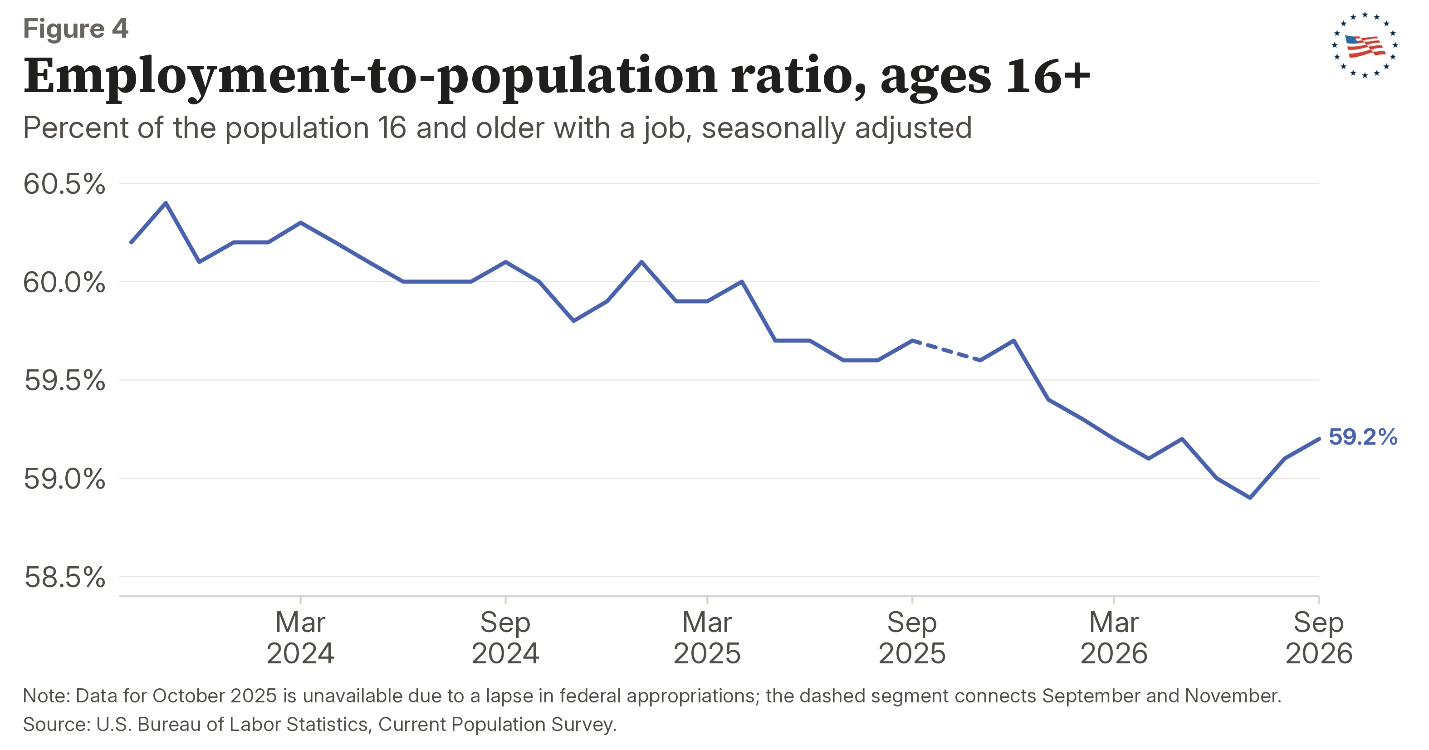
While the employment-to-population ratio has increased slightly in the past two months, the overall employment rate has been in decline since mid-2023. This can primarily be explained by an aging population, shown in Figure 5, that naturally has lower employment rates.
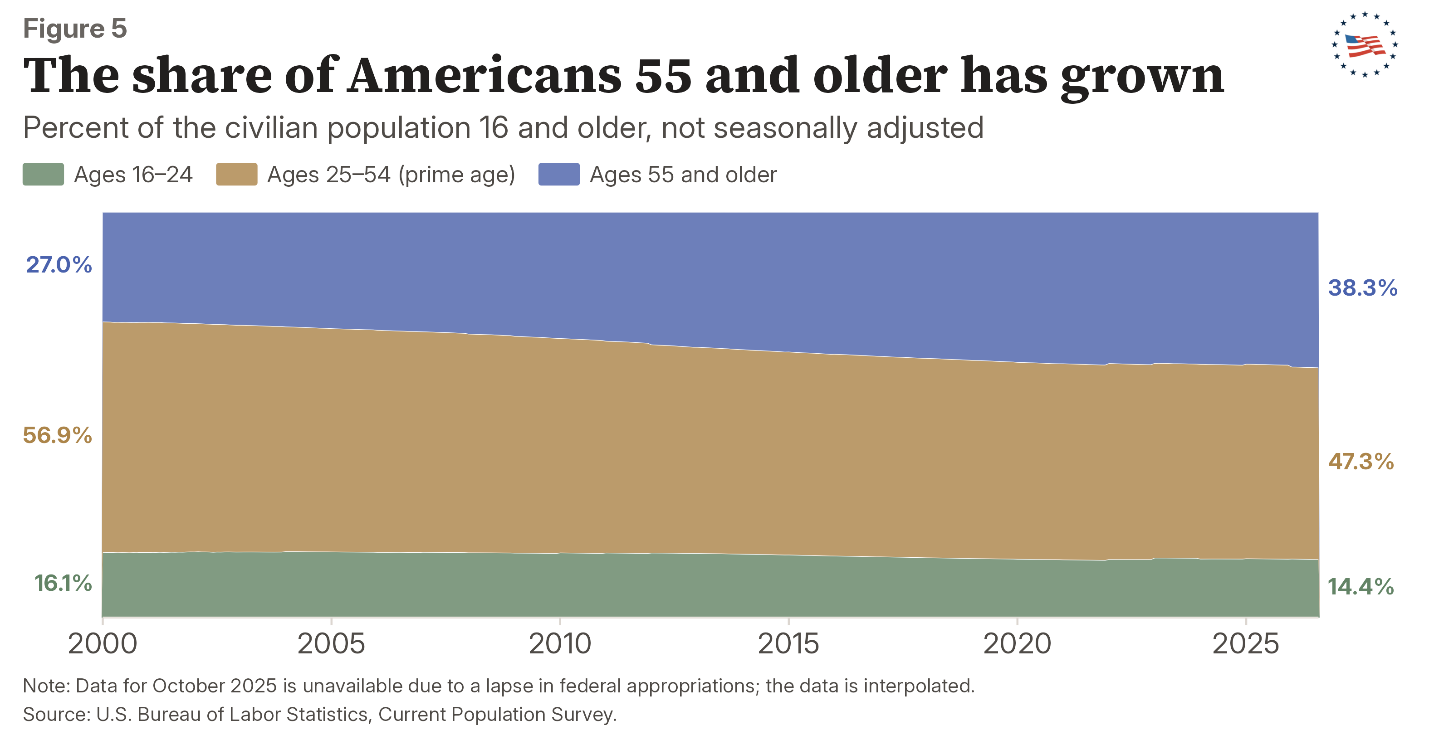
We can measure the impact the aging population has had on employment since 2000 by showing what the employment-to-population ratio would have looked like if the age composition of the country didn’t change. As Figure 6 shows, in that scenario, employment rates now would be much closer to what they were back in 2000. We estimate that aging accounts for 4.9 percentage points out of the total 5.2 percentage point drop in employment since 2000.
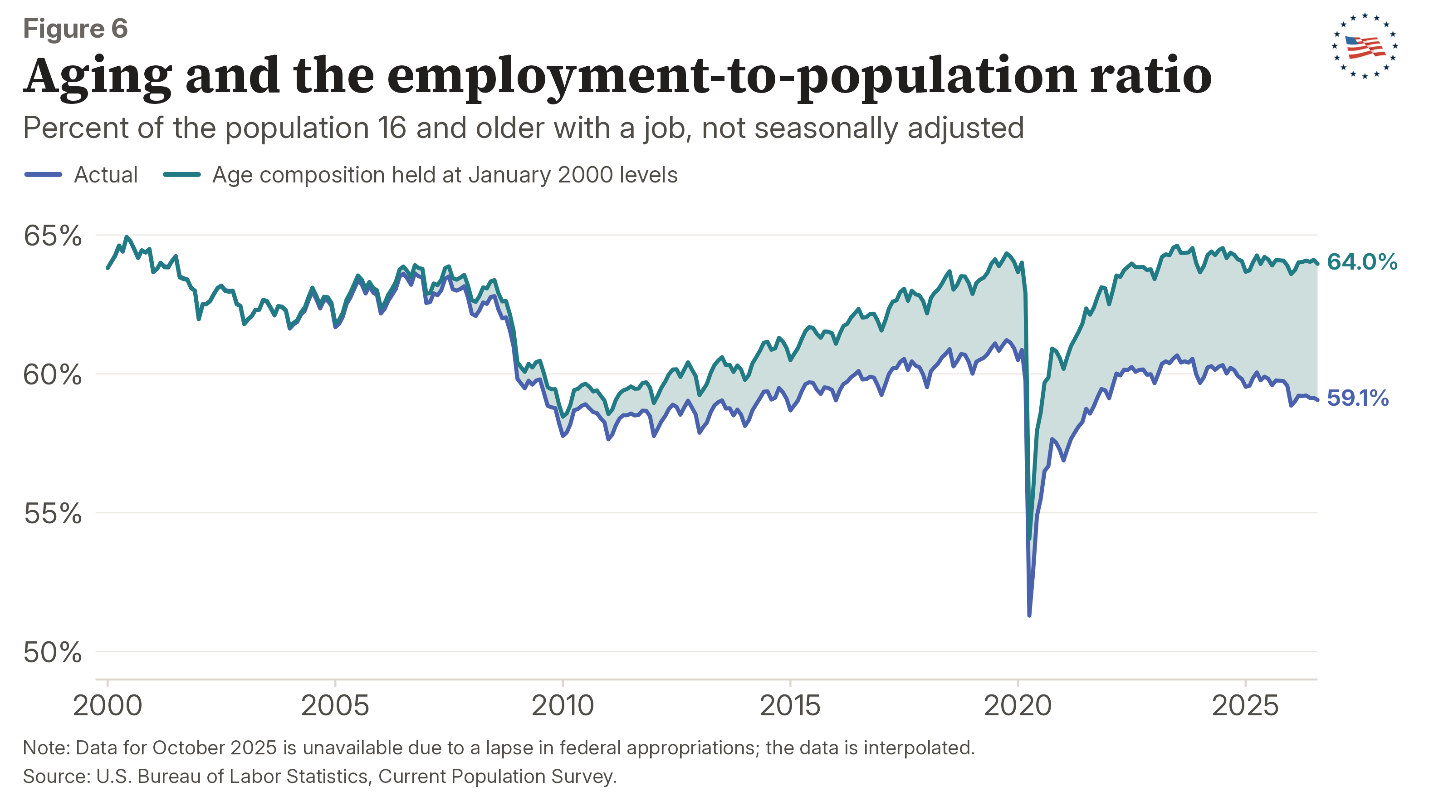
We can expect the total employment-to-population ratio, or employment rate, to continue to decline as the Baby Boomer population continues to age and as fertility rates have continued to decline.
BOTTOMLINE: This month’s jobs report gives some cause for concern, as job growth is very low across all sectors. Wage growth in the past year has also been slower than inflation, and we expect that average wages will have declined this September in real, inflation-adjusted terms.