
Policy Memo
Topline
Payroll employment increased by 162,000 jobs in August, while the unemployment rate remained unchanged at 4.1 percent.
Institute for Statistical Policy Analysis · Plymouth Institute for Free Enterprise
TOPLINE: Payroll employment increased by 162,000 jobs in August, while the unemployment rate held steady at 4.1 percent.
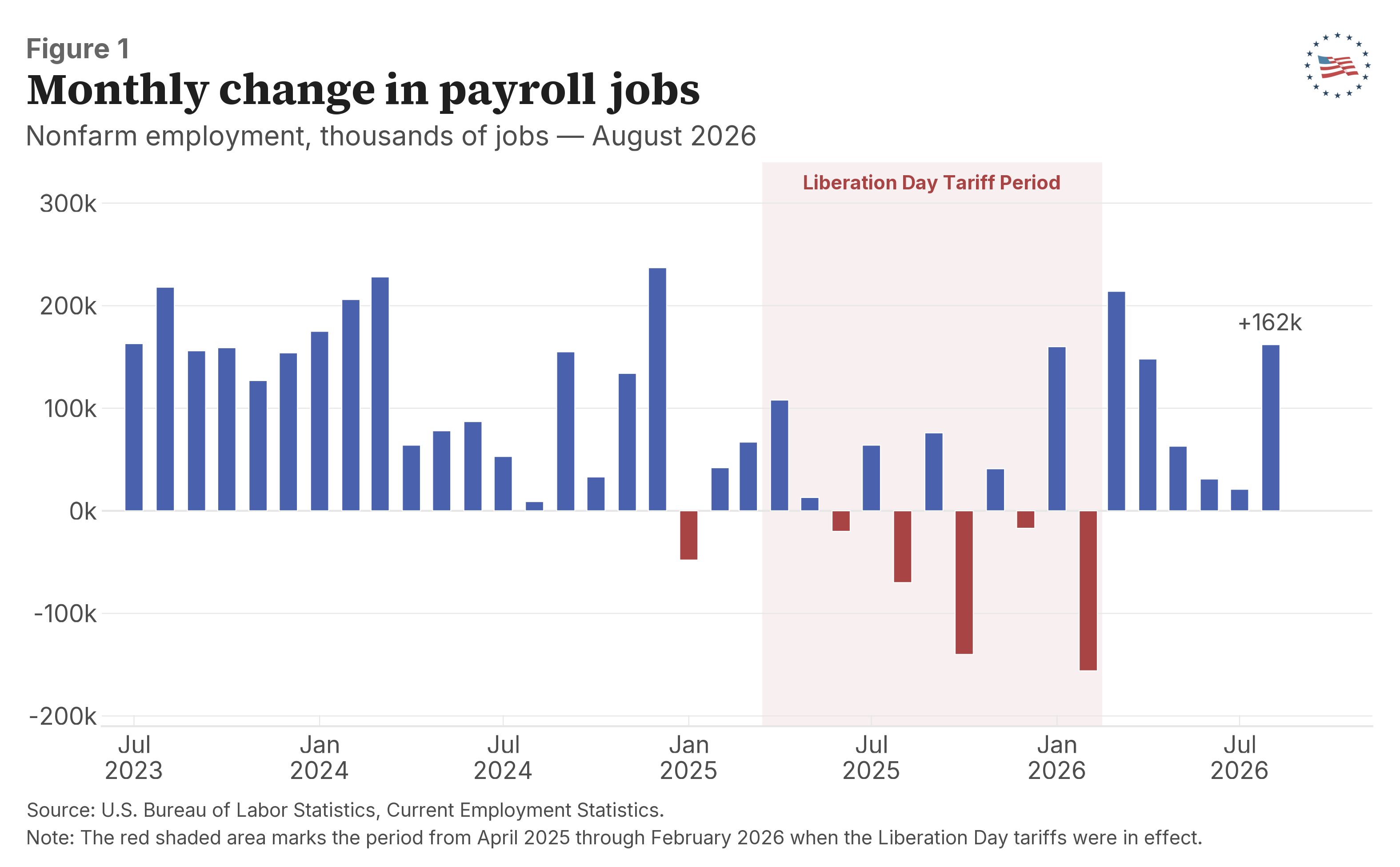
BACKGROUND: Employment growth was strong in August after a few months of seemingly stalled growth, shown in Figure 1. June and July job gains were revised slightly upward by a combined +55,000 jobs, with preliminary payroll growth estimates now standing at +31,000 for June and +21,000 for July.
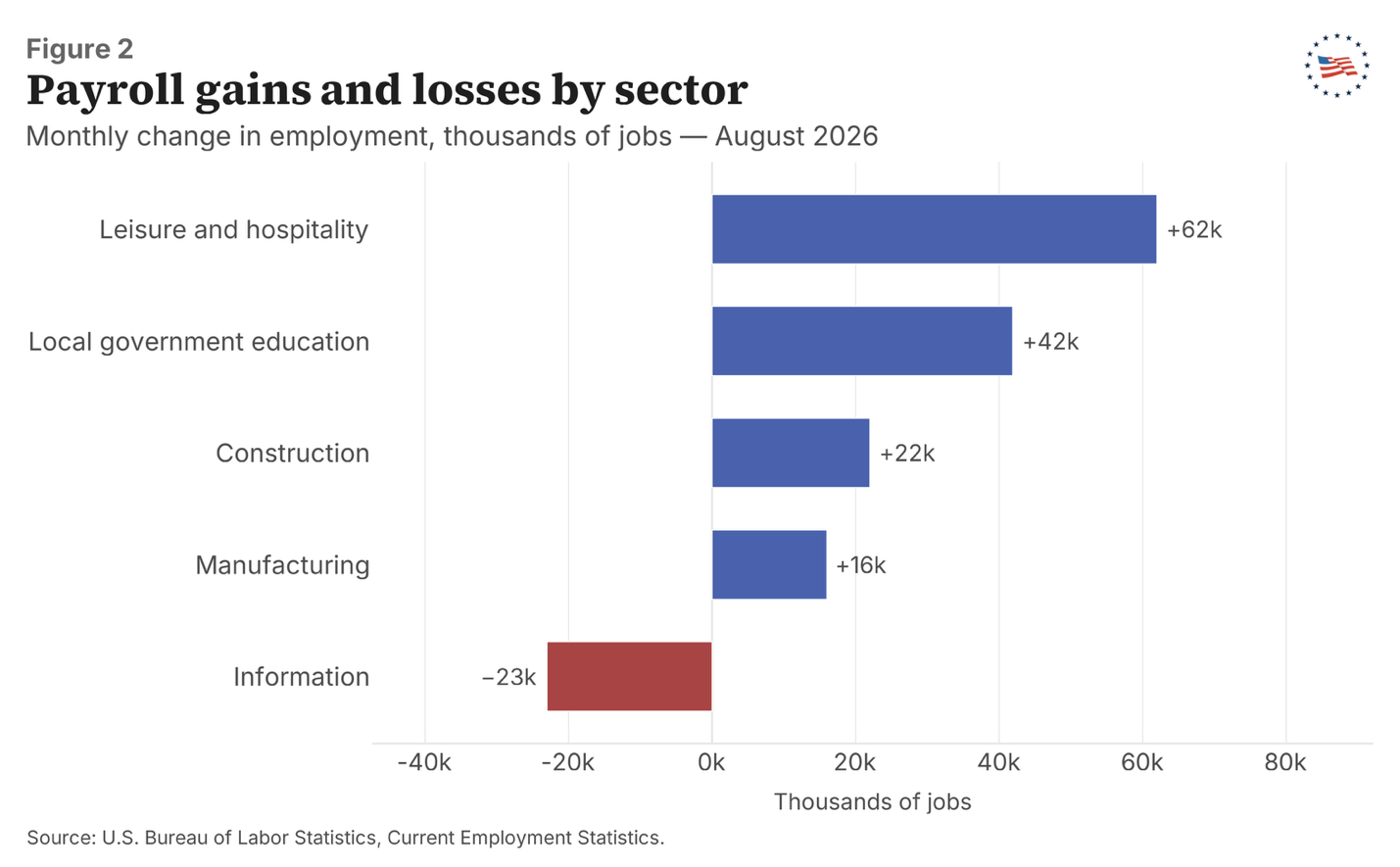
Total private employment grew by a healthy +127,000 this month. Excluding the highly subsidized healthcare and social assistance sectors, “true” private employment was up by +99,000, which is much higher than in previous months. Leisure and hospitality grew by +62,000, rebounding from losses that the sector experienced in the prior two 1. The information sector lost -23,000 jobs, continuing a trend of declining employment since late 2022.
Manufacturing employment increased by +16,000 in August and has grown by a statistically significant +55,000 over the past six months. 2 Similarly, construction employment increased by +22,000 this month and has grown by a statistically significant +63,000 over the last six months. The six-month numbers are of interest as there have now been six months of jobs data since the Supreme Court’s decision to strike down President Trump’s IEEPA tariffs in February.
Employment in local government increased by +50,000, with local government education accounting for most of the gain (+42,000). This increase mostly cancels out last month’s (now revised) -58,000 loss. The remaining sectors in the private economy (such as financial services, retail trade, transportation and warehousing, etc.) did not experience statistically significant employment gains or losses this month. Figure 2 depicts the monthly changes for a number of sectors.
The number of people employed part-time for economic reasons fell by 414,000, from 4.804M in July to 4.39M in August. One less promising sign is that average hourly earnings grew by 0.3% percent, which may not be sufficient to keep up with recently elevated levels of inflation.3
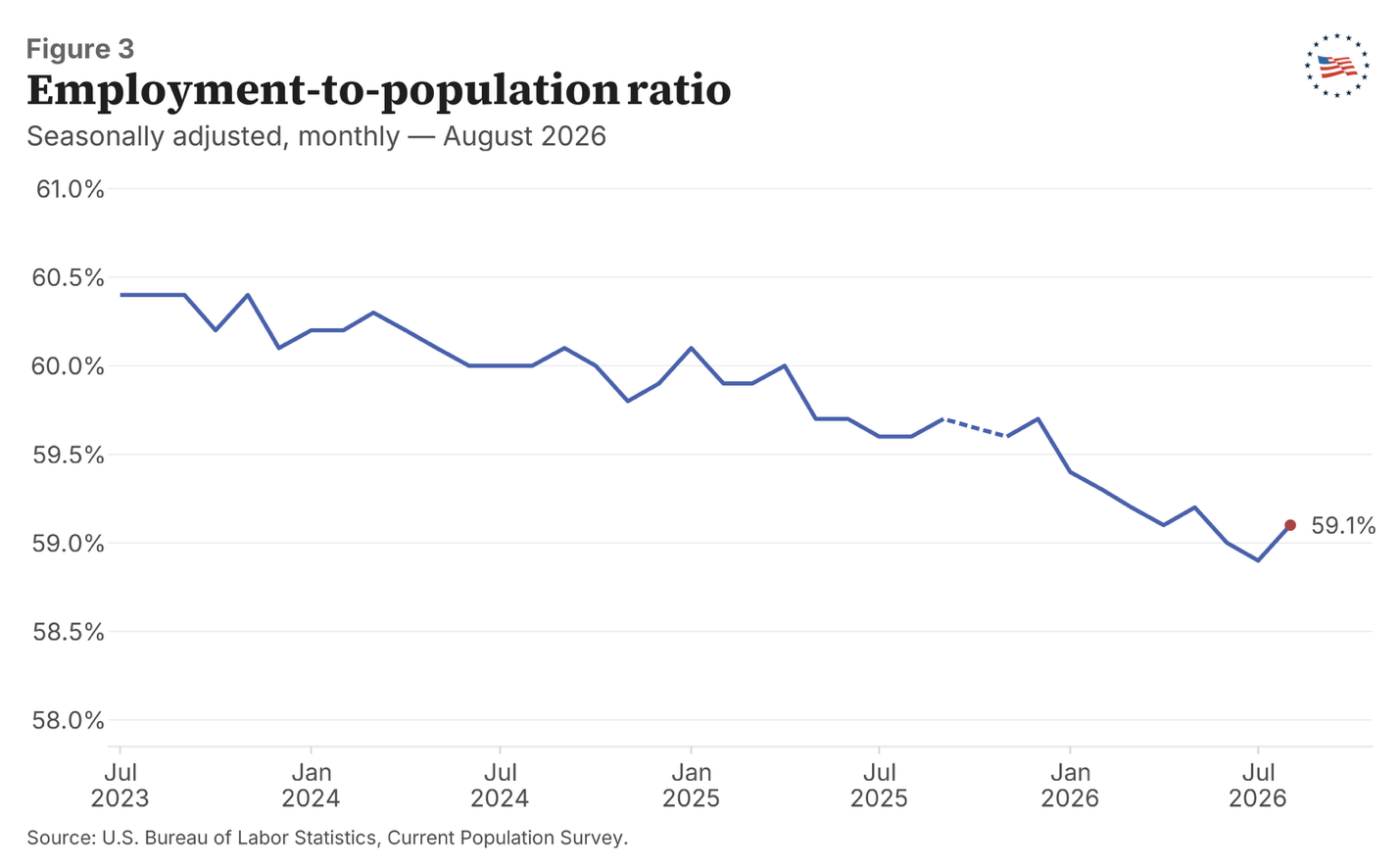
The uptick in the employment-to-population ratio is promising, but the downward trend since 2024 remains worrying. As the country’s population continues to age, there will be fewer working-aged people to support a growing economy.
BOTTOMLINE: The August Jobs Report included many promising indicators that could point to future growth: high private job growth, increased levels of employment with fewer people working part-time for economic reasons.
However, recent tariff escalations between the U.S. and Canada, the nation’s second largest trade partner, may increase business uncertainty. Employment growth during the period when the Liberation Day tariffs were in effect averaged -4,900 jobs a month. If trade negotiations continue to deteriorate, this may show up in future months as reduced employment growth.