
Policy Memo
Topline
U.S. consumers and industries depend heavily on trade with Canada and are highly vulnerable to a trade war with Canada. While this trade is concentrated among a handful of states, trade with Canada is a significant share of total trade for dozens of states.
Institute for Statistical Policy Analysis
TOPLINE: U.S. consumers and industries depend heavily on trade with Canada and are highly vulnerable to a trade war with Canada. While this trade is concentrated among a handful of states, trade with Canada is a significant share of total trade for dozens of states.
BACKGROUND: Canada is one of America’s largest trading partners. On August 22, 2026, the United States imposed a 50% tariff on certain Canadian dairy, alcoholic beverage, and motor vehicle imports under Section 338 of the Tariff Act of 1930. Canada matched this dollar-for-dollar and rate-for-rate on September 8, with tariffs ranging from 15% to 50% on U.S. steel, aluminum, dairy and consumer goods. The Trump Administration signed five new Section 338 proclamations the same day that Canada’s retaliatory tariffs took effect, including import bans scheduled for September 29. Alarmingly, negotiations are currently suspended.
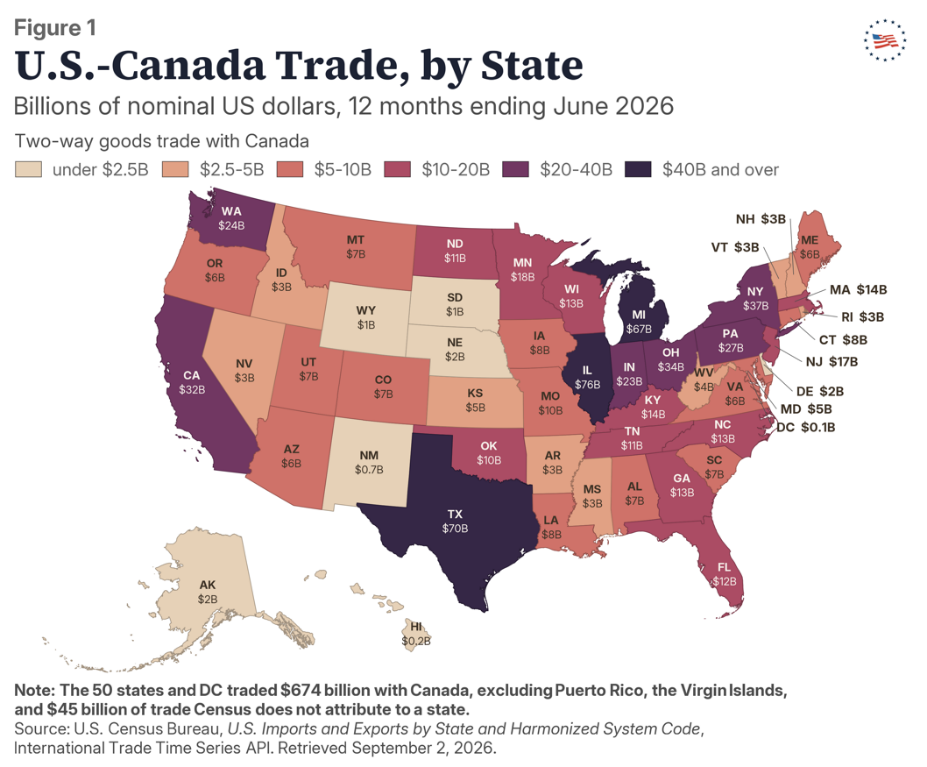
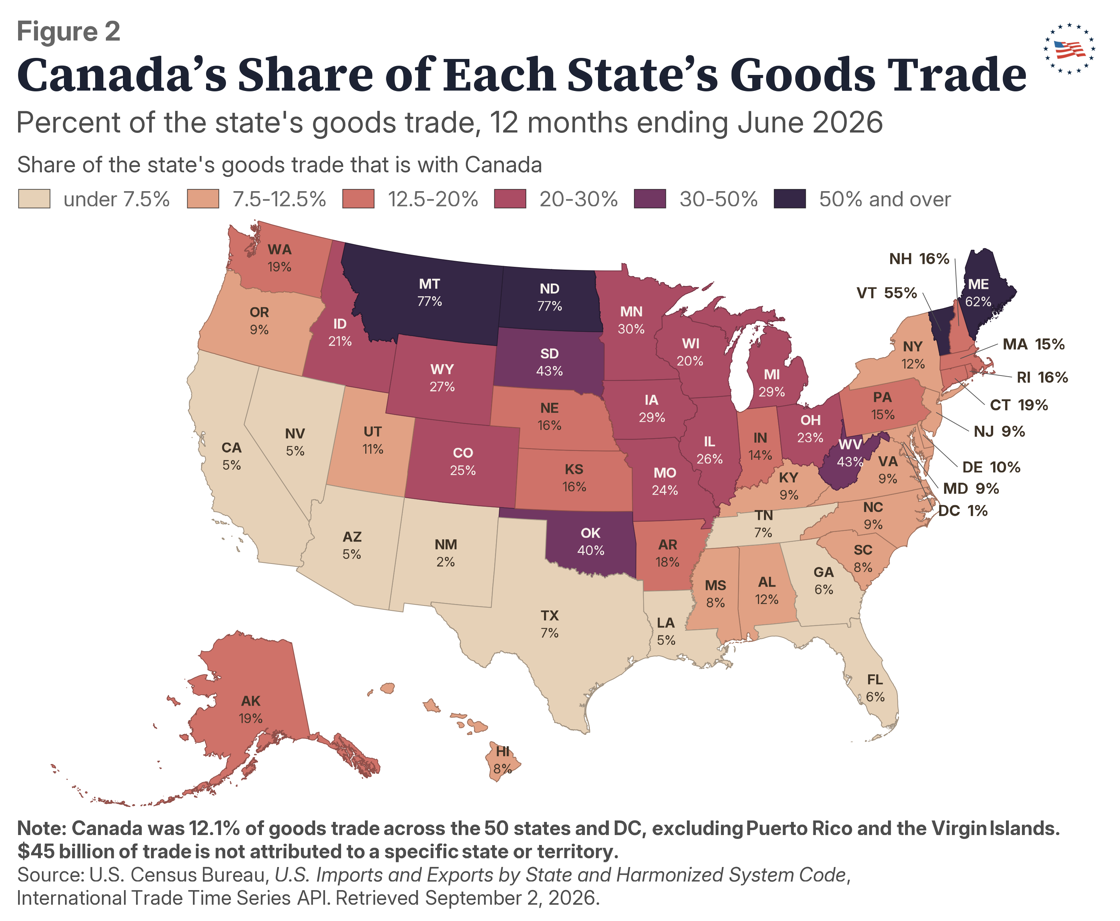
BOTTOMLINE: The U.S.-Canada trade dispute has continued to escalate. If these restrictions remain in place, or intensify further, policymakers can expect even higher prices and supply chain interruptions for American industries. A trade war with Canada will negatively impact many states, especially those heavily engaging in trade with Canada, including energy- and mineral-rich states, many heavy-industry dependent states, and our agricultural heartlands.