
Political Appointments
Background: Article II of the Constitution gives the President authority to nominate and, with Senate consent, to appoint “Officers of the United States.” Nominations are referred to the relevant Senate committee and, if approved, listed on the Executive Calendar. The Majority Leader decides which nominations to put before the Senate for consideration. The Minority Leader can allow the Senate to do so efficiently or force it to use time-consuming procedures.
The “Plum Book”: Published after each presidential election, the “Plum Book” (the cover is plum-colored) lists executive and legislative branch positions filled outside the regular civil service process. The 2024 Plum Book includes 936 positions requiring presidential nomination and Senate confirmation.
Traditional Confirmation Process Norms:
- The Senate confirmed Cabinet nominations quickly with little or no opposition, and often without even a recorded vote.
- Forcing separate votes under Senate Rule 22 to invoke cloture, or end debate, before voting on Cabinet nominations began in President Trump’s 1st
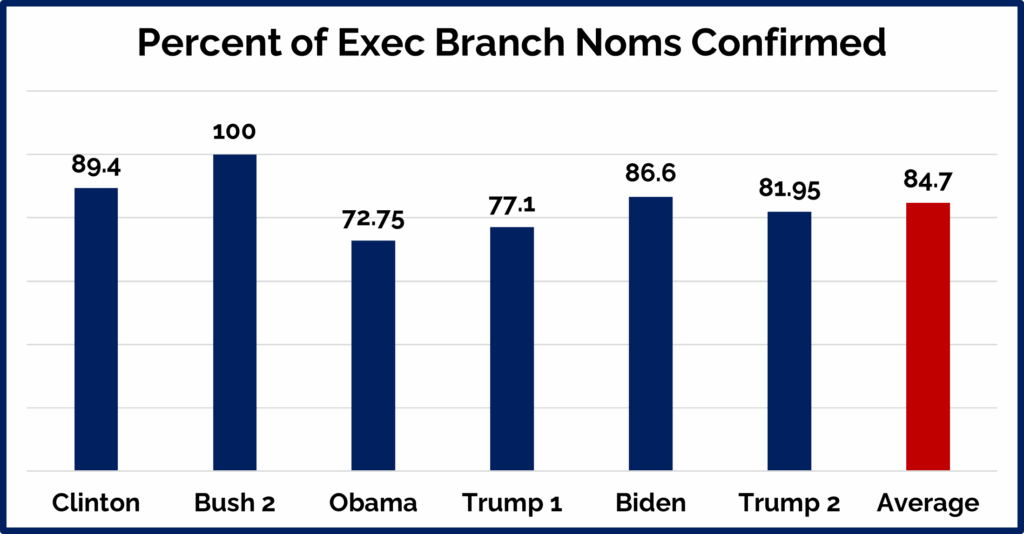
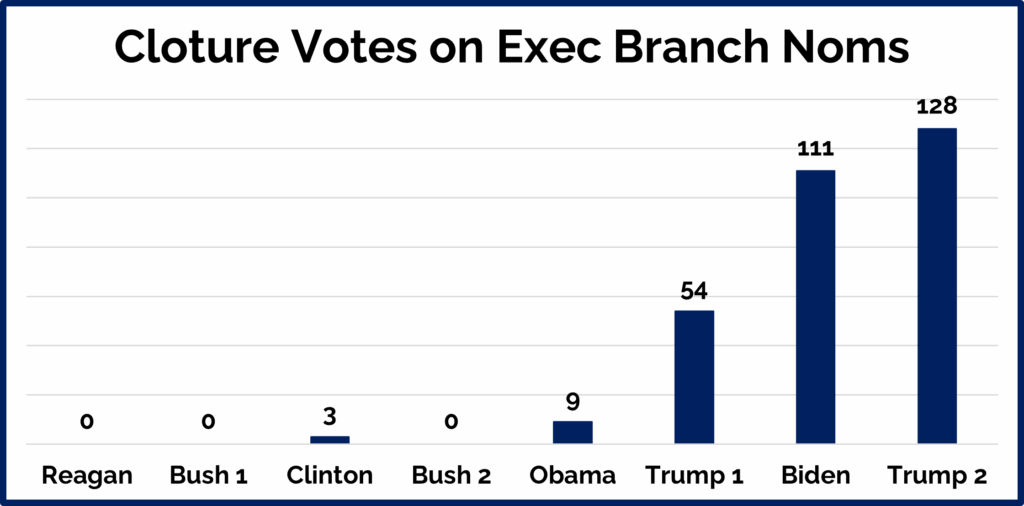
Data and analysis are drawn from or based on sources such as congress.gov.