
Policy Memo
Topline
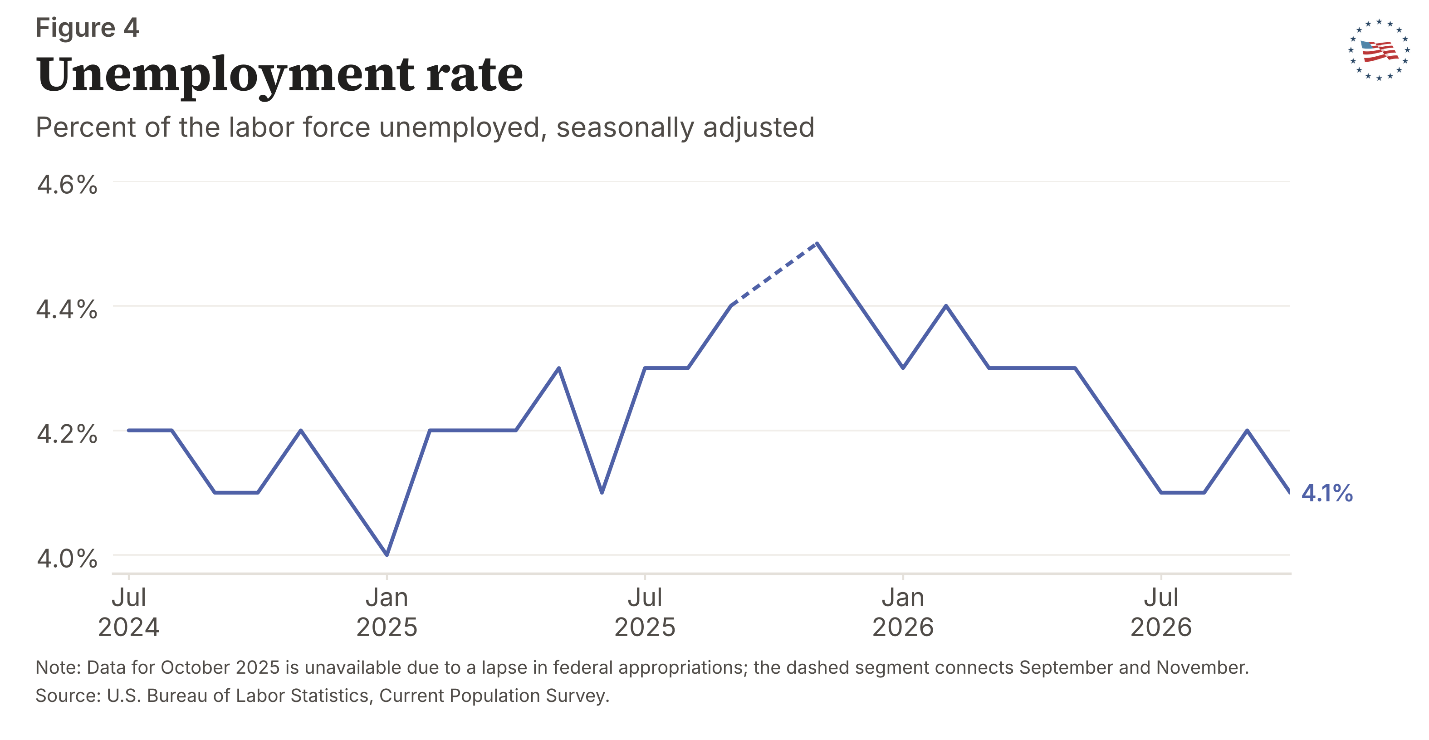
Payroll employment increased by 165,000 jobs in October, while the unemployment rate dropped to 4.1 percent.
Institute for Statistical Policy Analysis · Plymouth Institute for Free Enterprise
TOPLINE: Payroll employment increased by 165,000 jobs in October, while the unemployment rate dropped to 4.1 percent.
BACKGROUND: October delivered job growth higher than economists’ expectations,1 with total non-farm job growth estimated to be +165,000 jobs (Fig. 1).2 August and September jobs numbers were both revised upward by 53,000 and 31,000 jobs respectively, to an estimated +186,000 and +60,000 jobs gained.
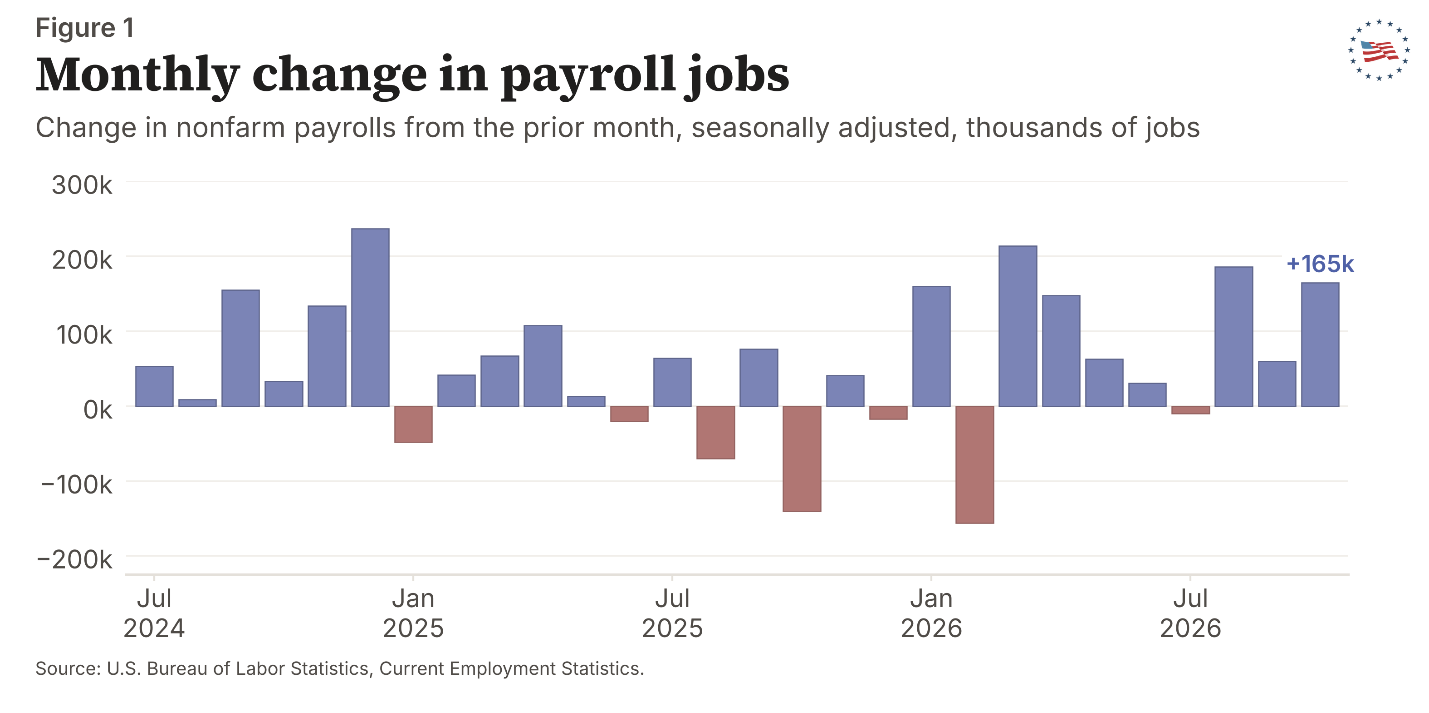
Employment growth in 2026 remains higher than it was during 2025, with an average monthly growth of +86,000 jobs in 2026, compared to less than +10,000 jobs a month in 2025. This is still much lower than the pre-COVID monthly average of +197,000 jobs a month from 2012 to 2019. Average job growth has likely been stunted by the negative impact President Trump’s Liberation Day tariffs had on employment.
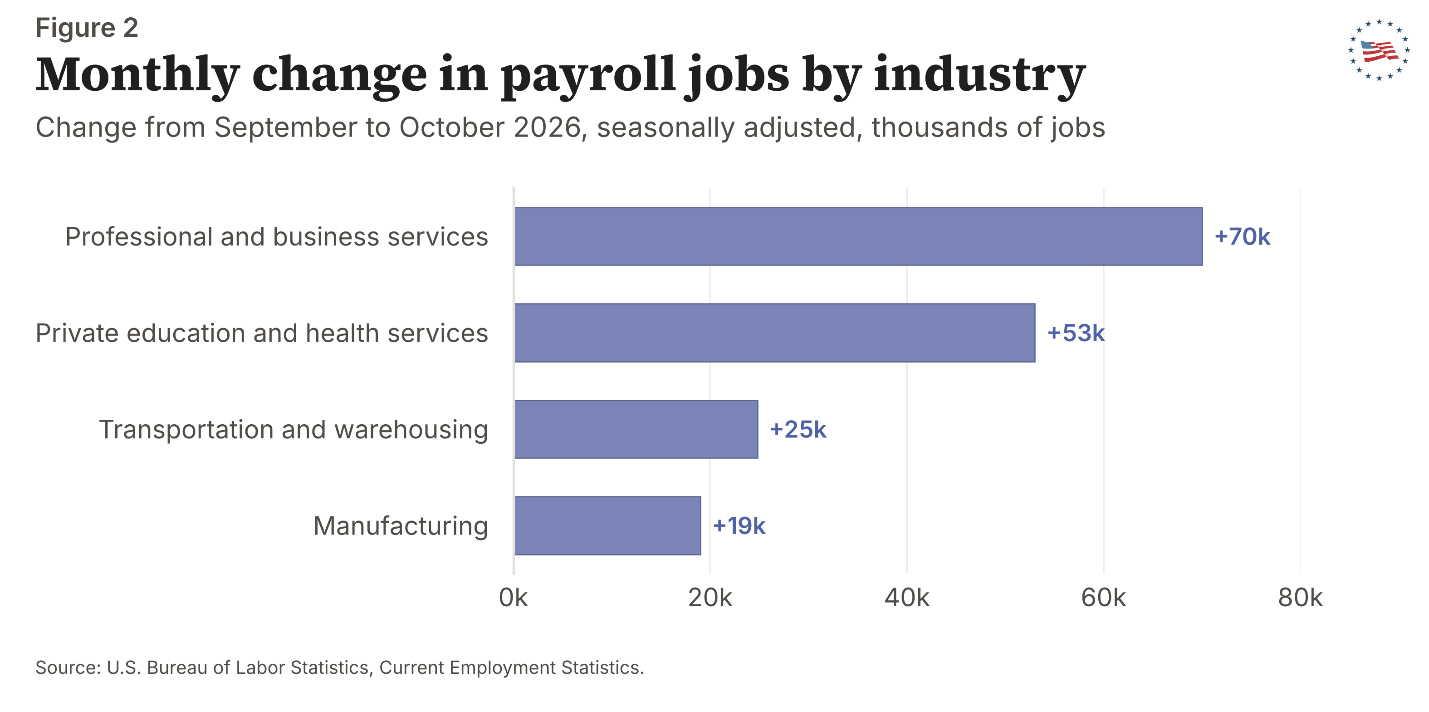
Total private employment grew by 159,000 jobs this month. This growth was primarily concentrated in business and professional services (+70,000 jobs), private education and health services (+53,000), and transportation and warehousing (+25,000). Manufacturing employment also saw a modest increase of +19,000 jobs (not statistically significant). No other sectors (such as information, retail trade, or leisure and hospitality) experienced statistically significant increases or declines in employment.
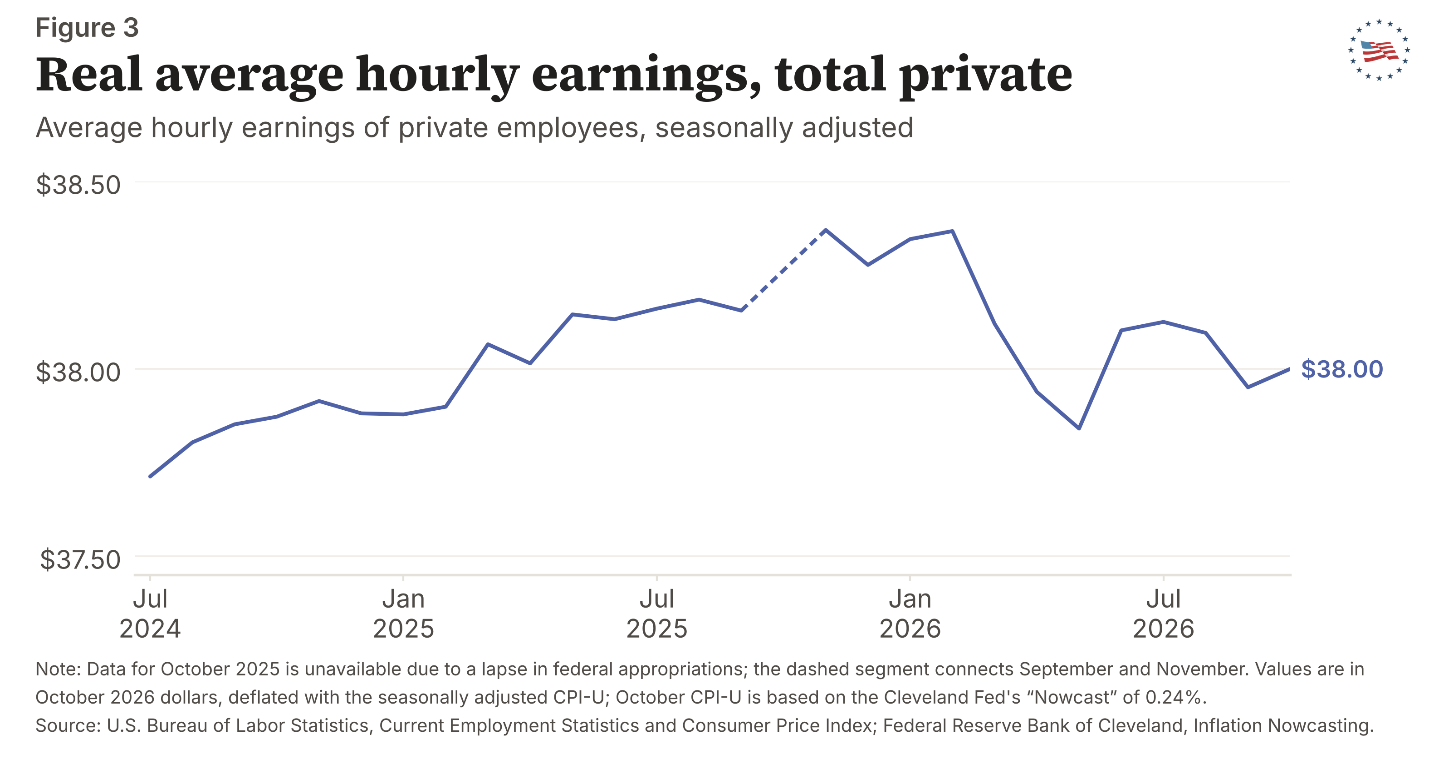
Average hourly earnings grew by 0.4 percent, higher than the Federal Reserve Bank of Cleveland’s “Nowcast” of a 0.24 percent increase in the Consumer Price Index for October. This is only a small increase in real terms (Fig. 3), but it is still a welcome sign compared to the past two months’ real wage decreases. Due to higher-than-average inflation this year, hourly wages are still lower in inflation-adjusted terms than they were one year ago.
This news of hourly wage growth, solid job growth, and continued elevated inflation may counter the remaining “dovish” instincts of some Federal Reserve board members to keep interest rates steady rather than to increase them.
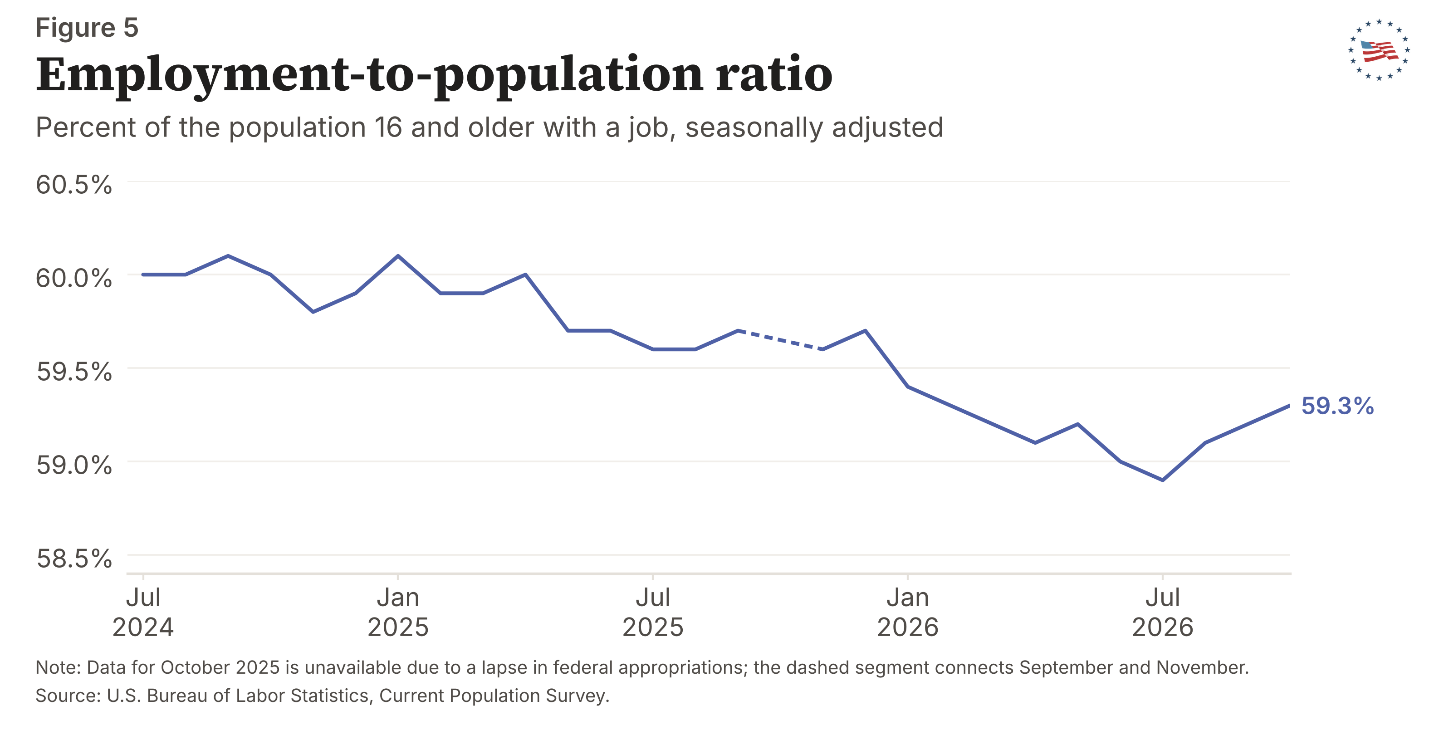
The U.S. held its midterm elections on Tuesday this week. Perhaps in repudiation of President Trump’s handling of the economy — with higher energy prices and tariffs increasing prices and slowing employment growth — voters overwhelming came out in favor of candidates from the opposing Democratic Party.
Employment in political organizations is normally outside the scope of the BLS’s Jobs Report,3 as employment in political organizations makes a miniscule fraction of total employment.4 Nevertheless, it may be interesting to look at employment in political organizations.
Figure 6 shows how payroll employment in political organizations rises with every approaching midterm and presidential election, and falls after the election cycle concludes, with employment modestly trending up over time.
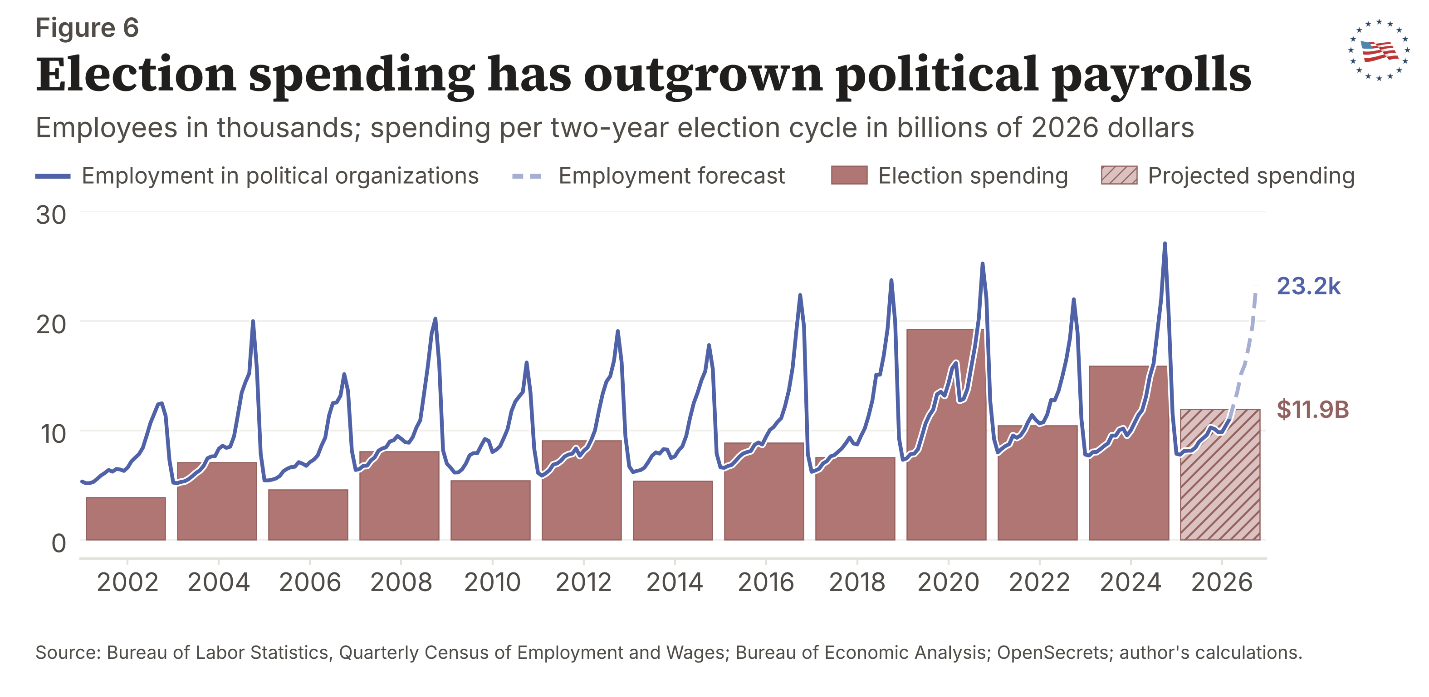
Meanwhile, inflation-adjusted campaign spending has outpaced employment growth in political organizations. This may be because political organizations are spending more on advertisements and events, and/or hiring more contractors in proportion to their payroll employment.
BOTTOMLINE: This month’s jobs report brings welcome news, with higher-than-expected employment growth concentrated in the highly productive business and professional services sector. Average hourly wage growth was also higher than inflation, but wages are still lower in real terms than they were a year ago.