Policy Memo
Topline
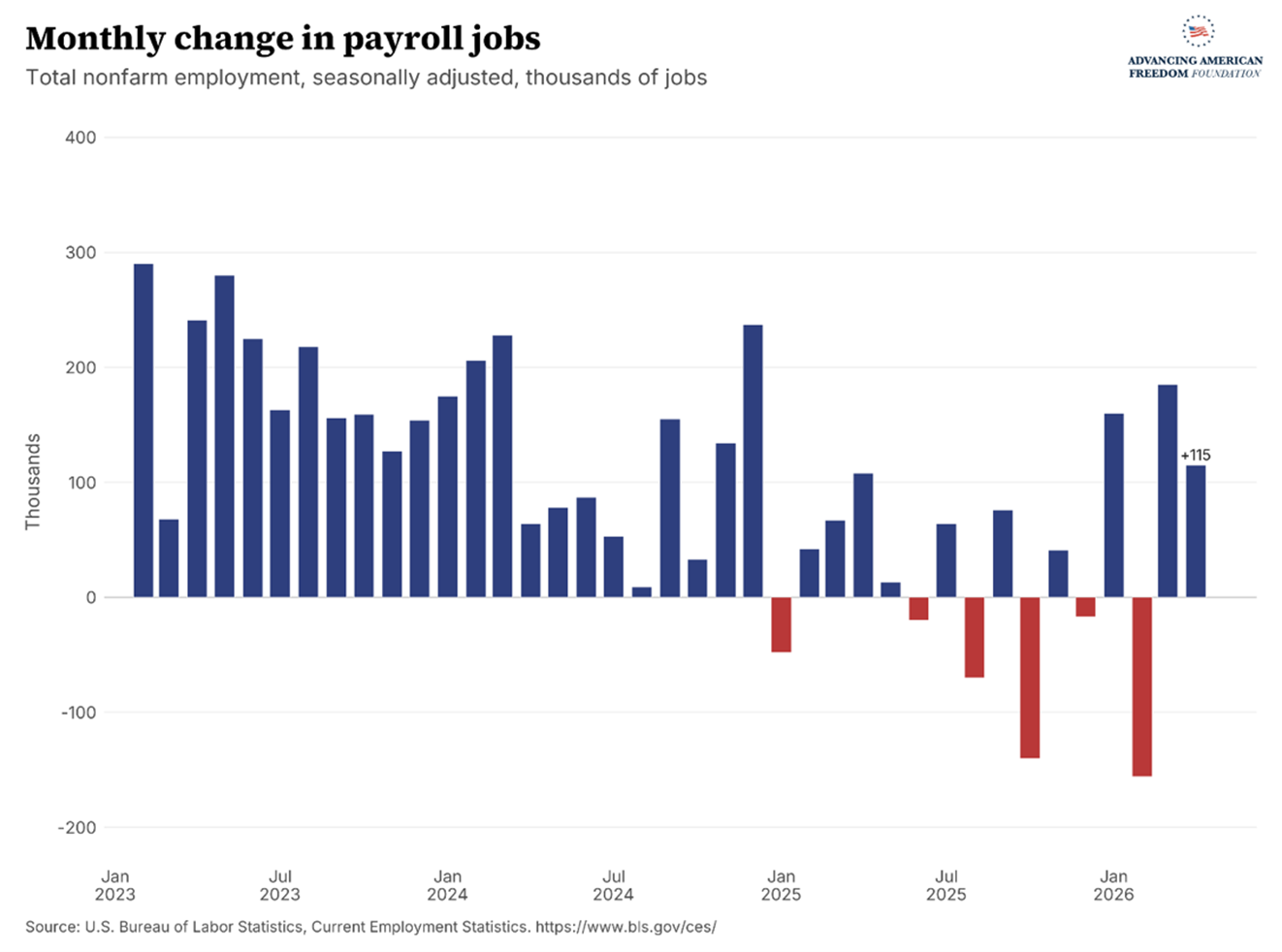
Payroll employment increased by 115,000 jobs in April, and the unemployment rate remained stable at 4.3 percent. [1]
Authors: Gadai Bulgac; Rachel Greszler
Payroll employment increased by 115,000 jobs in April, and the unemployment rate remained stable at 4.3 percent. [1]
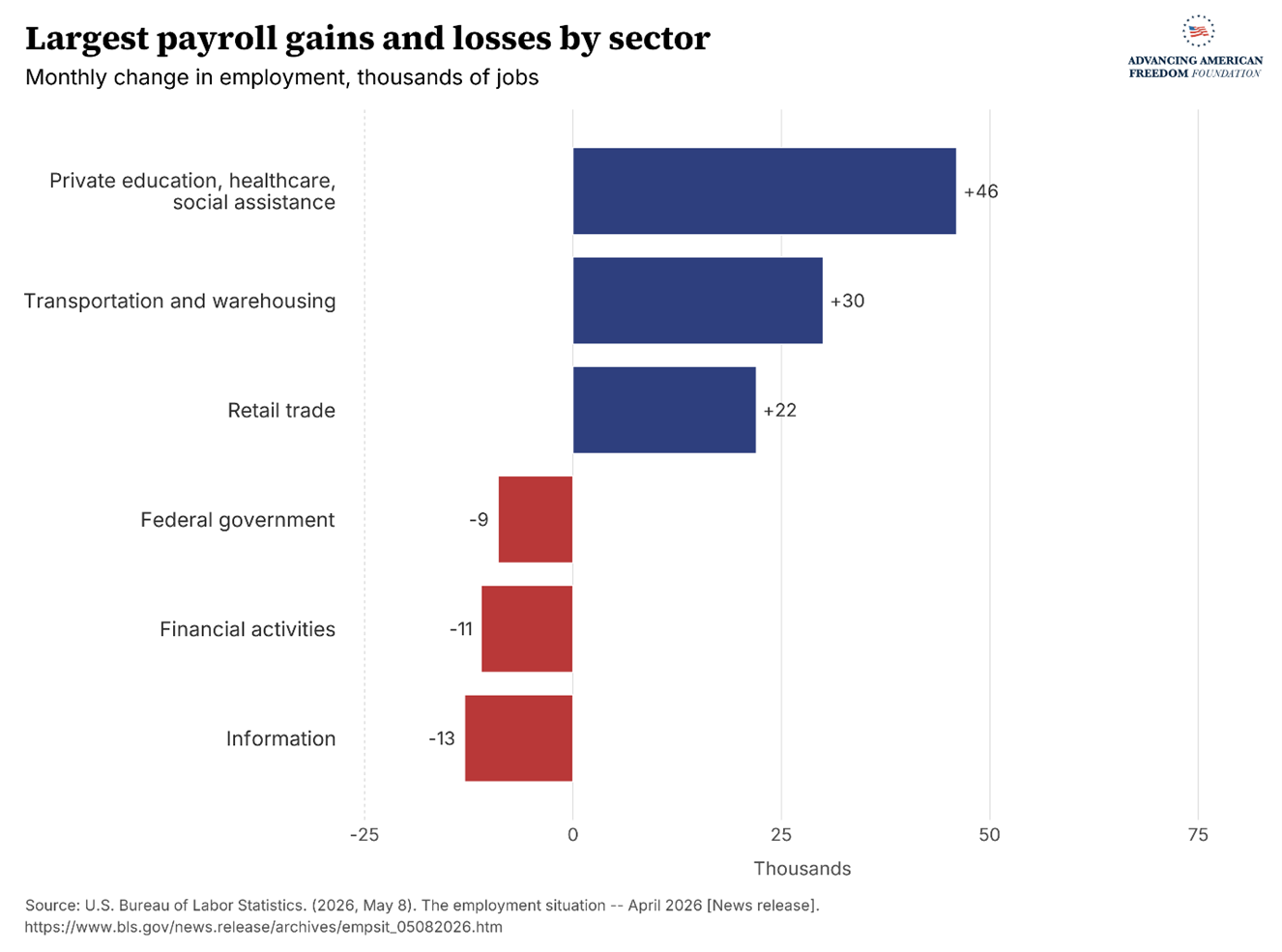
April marks the second full month of jobs data since the Supreme Court ruled President Trump’s IEEPA tariffs unlawful. This might be the reason the only reported statistically significant gains in employment this month came from transportation and warehousing (+30,000) and retail trade (+22,000), which are quite sensitive to tariffs. Private education, healthcare, and social assistance saw modest gains (+46,000), relative to the sector’s size.
Federal government employment fell by 9,000 in April and is down by 345,000 since January 2025. Private sector employment rose by 123,000 in April and is up by 717,000 since January 2025 (an average of 48,000 per month).
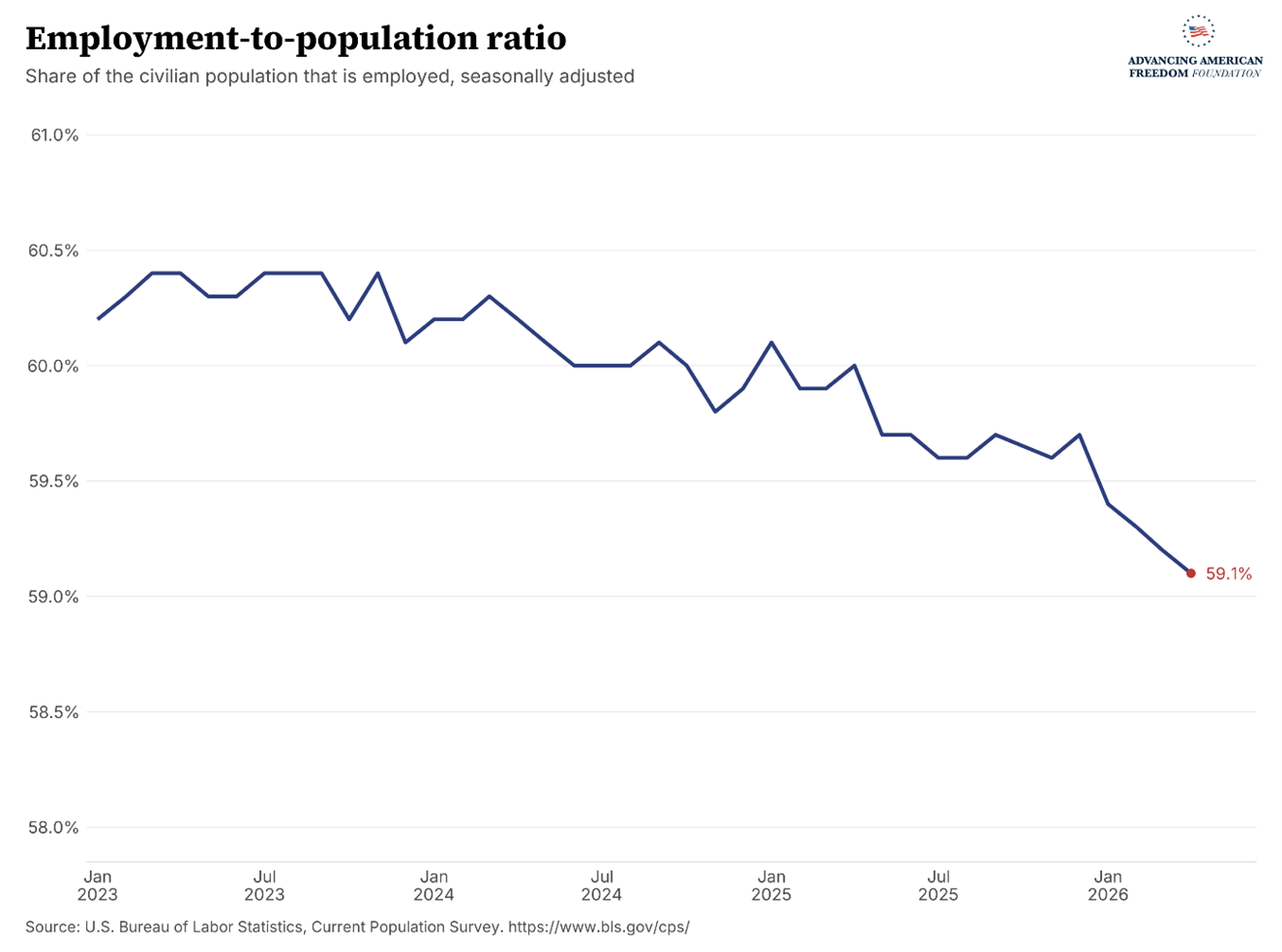
While additional months will be needed to confirm a trend, the SCOTUS decision ruling the IEEPA tariffs unlawful in February—and now an initial May 7 decision against President Trump’s subsequent Section 122 tariffs—may have provided a turning point in a previously lackluster labor market. Reduced tariff-related costs and uncertainty could allow employment growth to strengthen in the coming months. At the same time, the One Big Beautiful Bill likely helped keep the labor market afloat during this period, may have prevented employment conditions from deteriorating further, and could support stronger employment growth going forward.
[1] Bureau of Labor Statistics, Employment Data, https://www.bls.gov/data/home.htm#employment (accessed May 8, 2026).