TOPLINE: Net interest payments now cost the federal government over $1 trillion annually – more than defense. Interest costs are projected to grow even higher, with damaging fiscal consequences and effects on the economy more broadly.
A Crushing Burden
The national debt recently surpassed $40 trillion, and debt held by the public stands at $32.4 trillion, almost as much as the nation's GDP. To put this in perspective, that is over $240,000 of publicly held debt per American household.
Like any other loan, the federal government must pay interest on this debt. The larger the debt grows, the larger the interest payments generally become, making it progressively more difficult to pay down the debt.
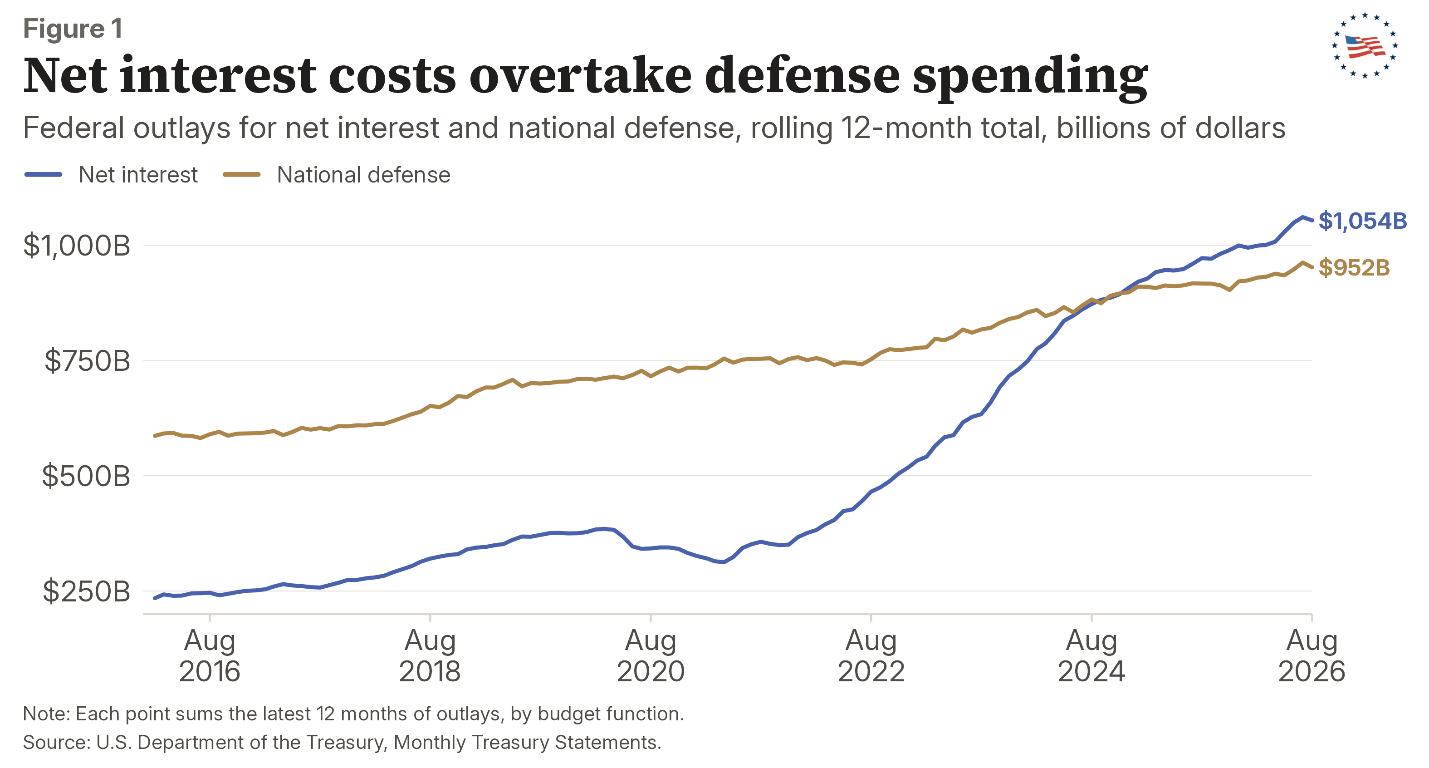
Interest costs overtook defense spending in 2025, seen in Figure 1 below. In the past 12 months, interest costs totaled $1,054 billion (or over a trillion dollars), amounting to approximately $7,800 per household.
Figure 1
Interest Rate Sensitivity and Effects
The yield on the 10-Year Treasury Note (“the 10-Year”) surged over 5% in recent weeks, with yields now at highs not seen since 2007. Though rates were higher during the inflationary period in the late 1970s to early 1980s, the size of the debt was modest.
Today, the national debt has grown so large relative to the economy that even small increases in rates can cause interest costs to soar. The Congressional Budget Office (CBO) estimated that a gradual one percentage point increase in projected interest rates would add $1.4 trillion in net interest costs over the next decade and $35.7 trillion over 30 years.
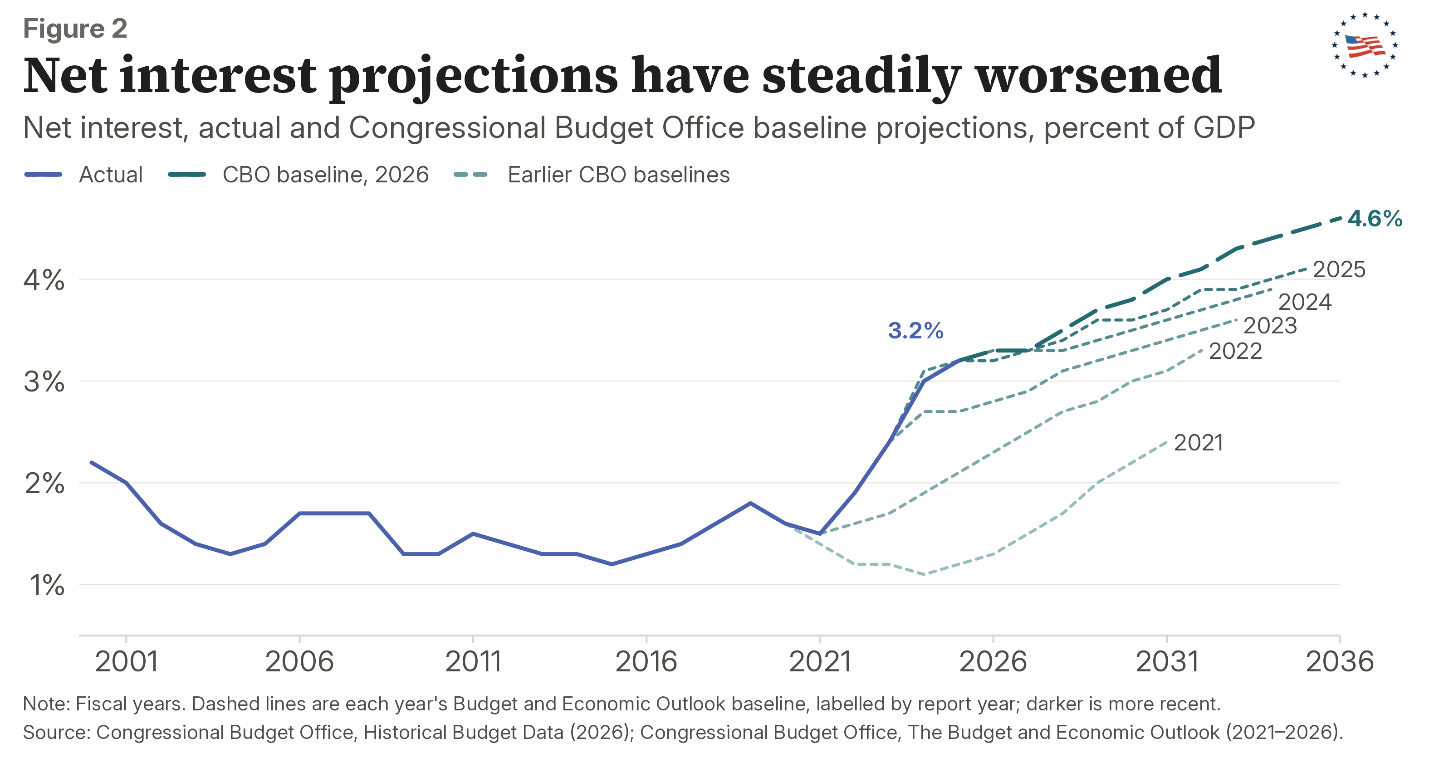
The CBO’s long-term projections of net interest costs relative to the economy have steadily worsened, represented in Figure 2.
Figure 2
The 10-Year is used by many financial institutions as the benchmark for long-term debt like mortgages and bonds. Rising interest rates on government debt lead to higher borrowing costs for everyone else, including for housing.
A Debt Spiral and Fears of Inflation
To pay interest on its debt, the federal government has borrowed more money, much like taking out a new line of credit to cover one’s minimum credit card payment. Unlike WWII, today’s high deficits show no signs of reversal.
The national debt may grow so large that investors could simply lose confidence in the federal government’s ability to repay its debt. In that situation, the Federal Reserve may be forced to “monetize” the debt; in essence, printing money to pay off the debt.
This would, naturally, trigger a wave of inflation. To account for this possibility, lenders demand higher rates. This could, in turn, cause a spiral where climbing interest rates would make the fiscal situation worse, leading investors to demand even higher rates, and so on.
BOTTOMLINE: Rising interest rates could be a signal that investors are losing confidence in the federal government’s fiscal standing. To avoid a fiscal crisis, Congress must begin to curb federal spending now, before the best option the government has left is to monetize — or inflate away — the debt.