Policy Memo
Topline
The evidence shows the One Big Beautiful Bill's tax provisions disproportionately benefit working and middle-class Americans.
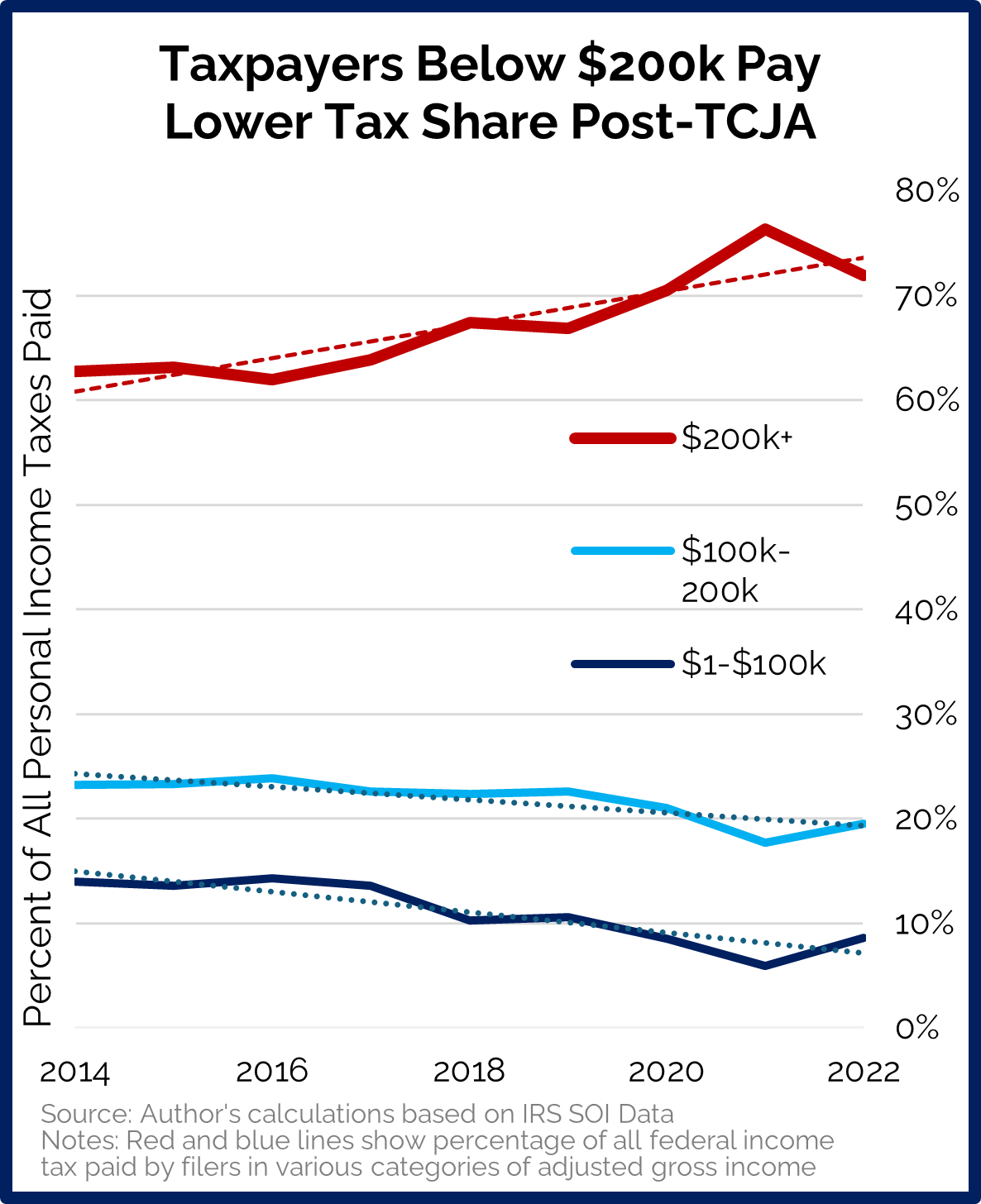
The share of income taxes paid by taxpayers with low to moderate incomes will fall under the One Big Beautiful Bill, as happened with the 2017 tax cuts.
Critics of the 2017 Tax Cuts and Jobs Act (TCJA) attacked the legislation as being “tax cuts for the rich.” In reality, not only did TCJA reduce the amount of taxes paid by low- and middle-income taxpayers, but it also reduced the share of income taxes they paid.
Facts and Figures
OBBB extended TCJA’s individual income tax cuts that, as described above, disproportionately reduced taxes paid by low- and middle-income Americans. Most of OBBB’s significant new or expanded tax cuts will further reduce the tax share of low- and middle-income earners, including a further increase to the standard deduction, the Child Tax Credit increase, adjustments to the bottom two tax brackets, No Tax on Overtime, No Tax on Tips, No Tax on Car Loan Interest, the senior deduction, and changes to charitable deductions.
High-income Americans pay a disproportionate share of taxes. That won’t change under OBBB.
This memo is part of the One Big Beautiful Booklet, a collection of more than 60 memos that examine and summarize the major aspects of the One Big Beautiful Bill – the signature legislative achievement of President Trump and the 119th Congress.
more ob3-60 memos