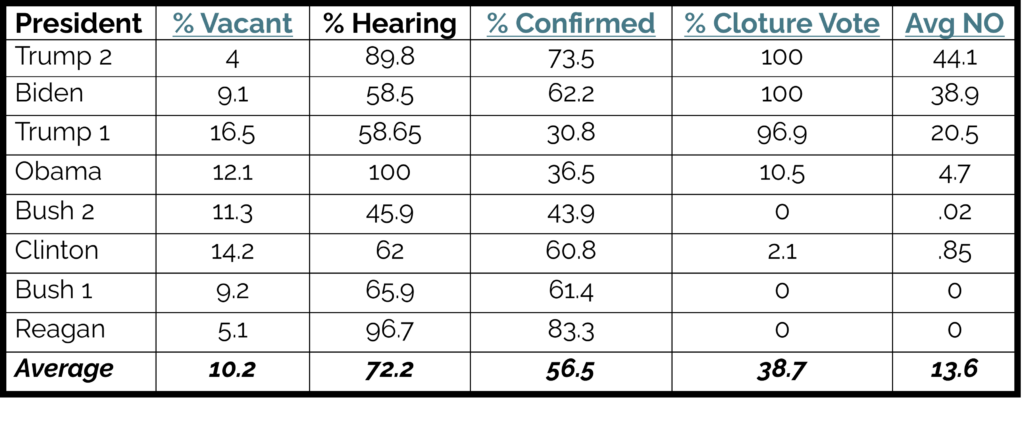
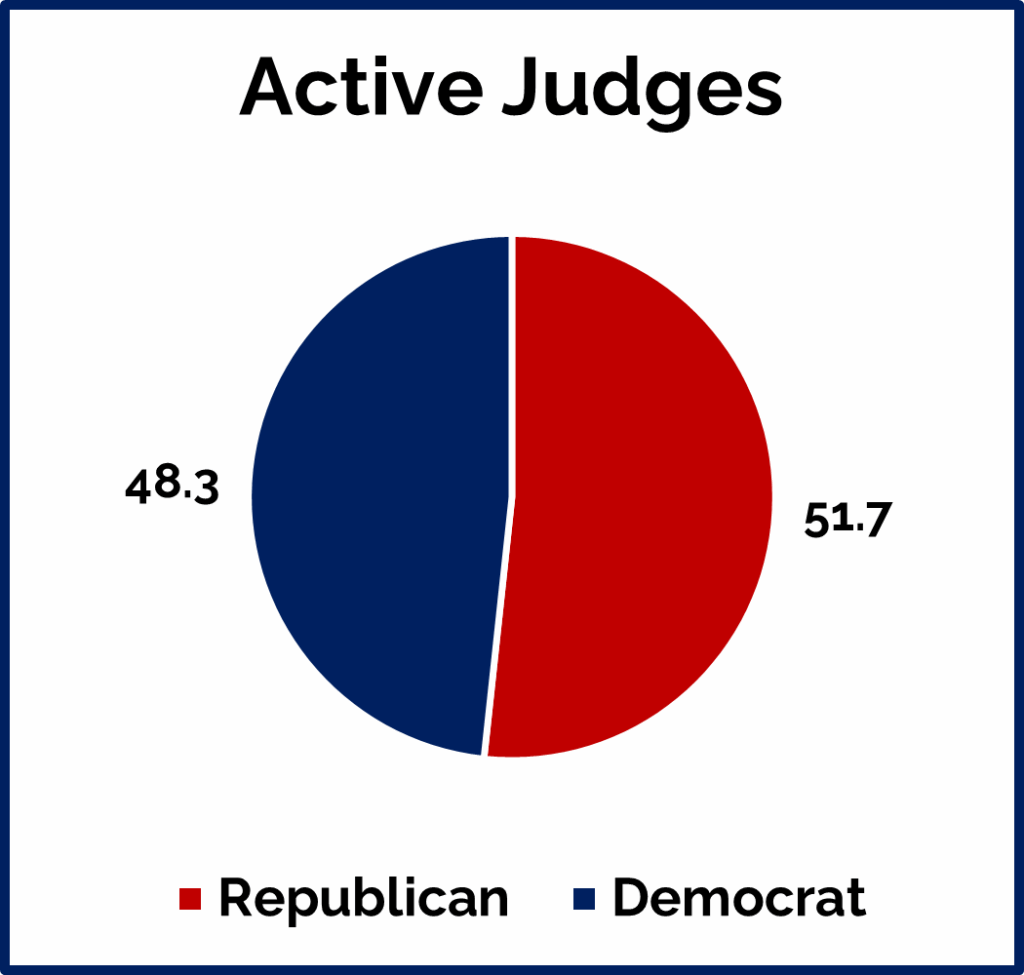
Background: Article III of the Constitution created the Supreme Court and gives Congress authority to create “inferior” courts with judges who serve “during good Behaviour.” Nominations to Article III courts are referred to the Senate Judiciary Committee and, if approved, listed on the Executive Calendar. The Majority Leader decides which nominations to bring up for action.
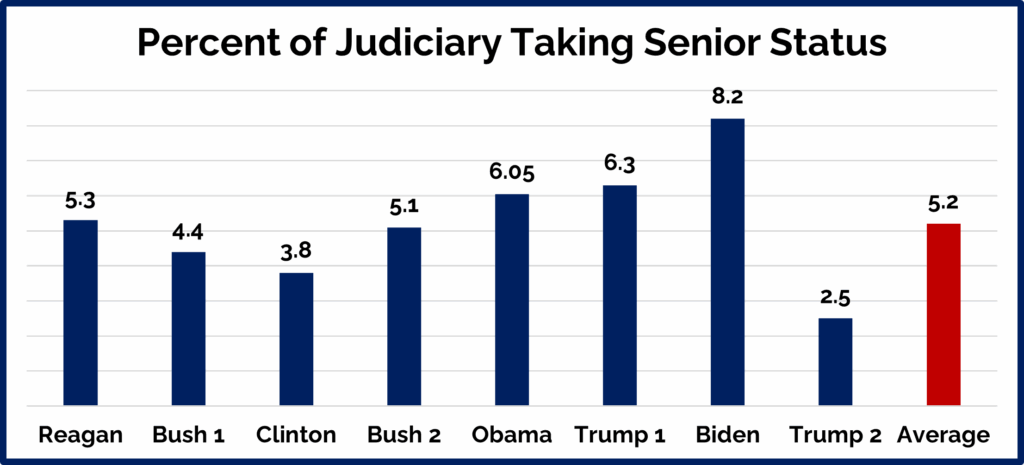
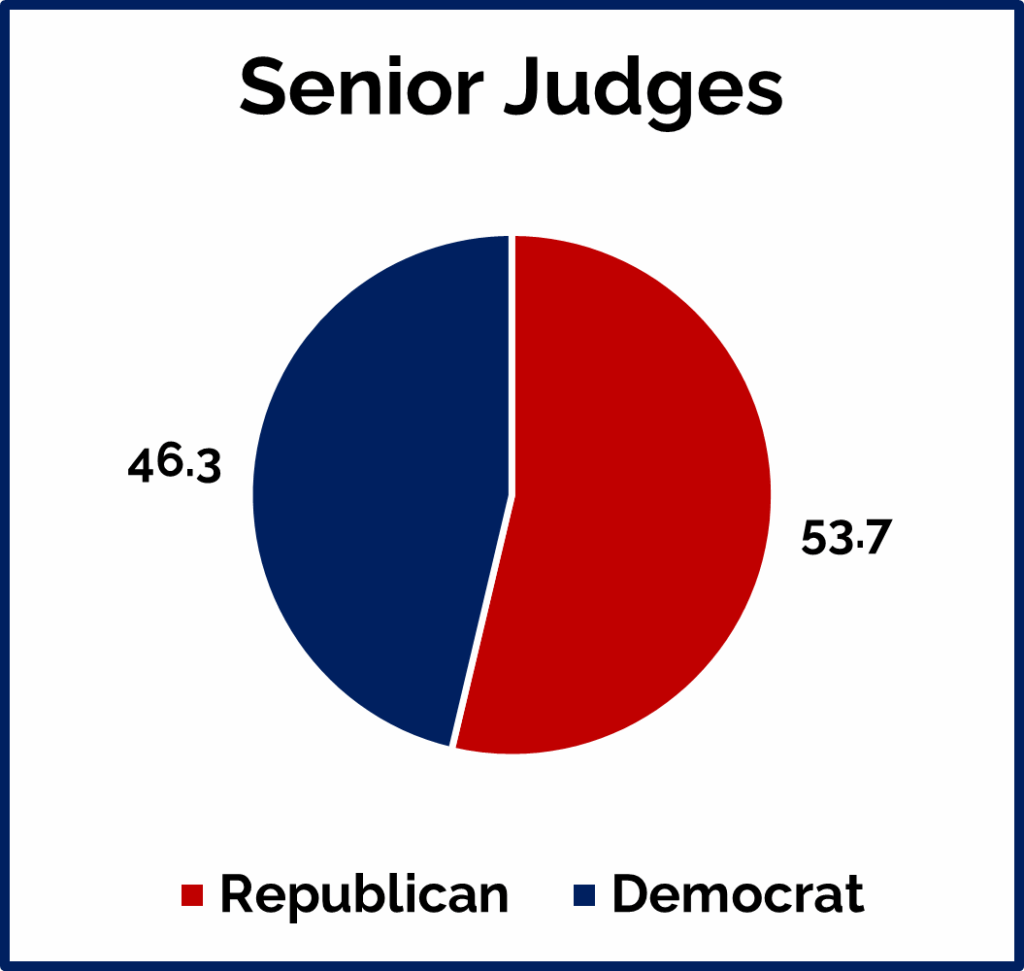
Senior Status: Judges qualify when they reach 65 with at least 15 years of federal judicial service, opening their position for a new appointment. 28 U.S.C. §371 requires that, to maintain senior status, judges have at least a 25% caseload or perform substantial judicial or administrative duties. Senior judges handle about 20% of the cases in the federal judicial system.
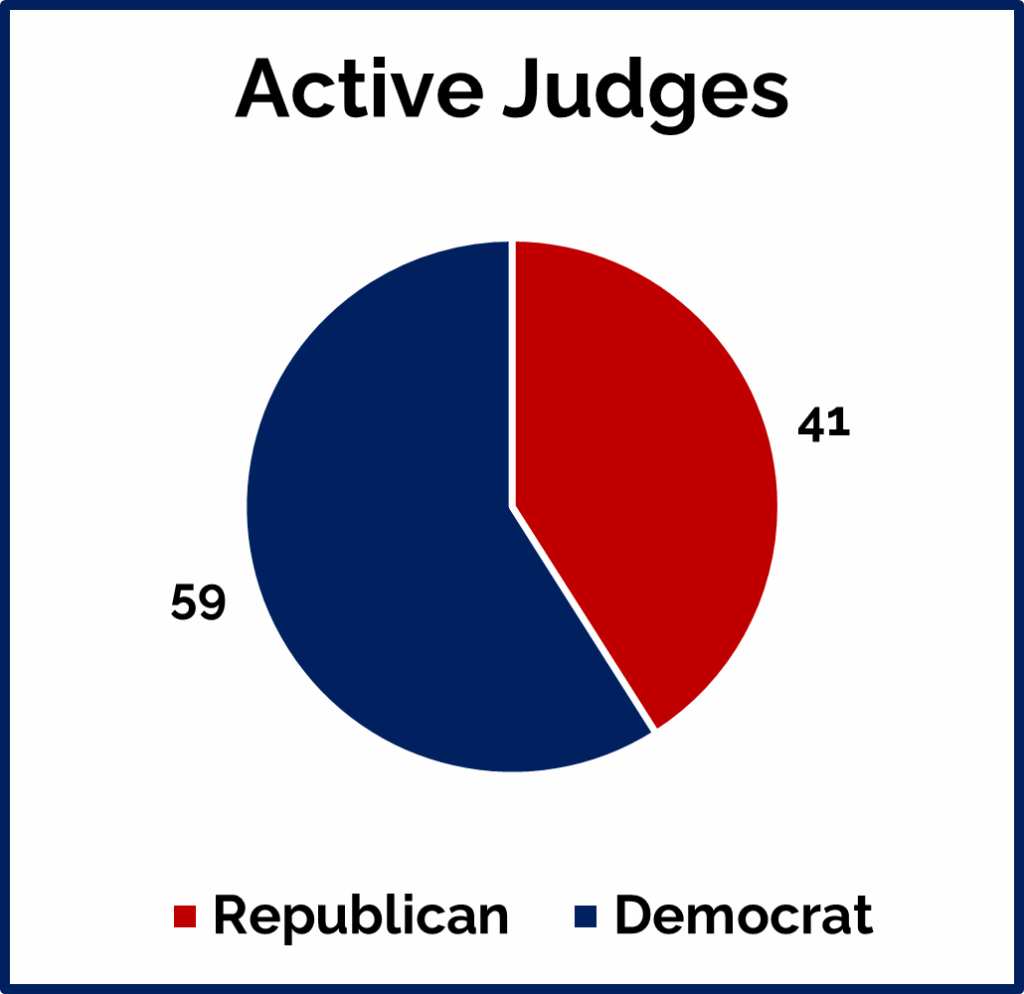
Composition of U.S. Court of Appeals
(Percent Appointed)
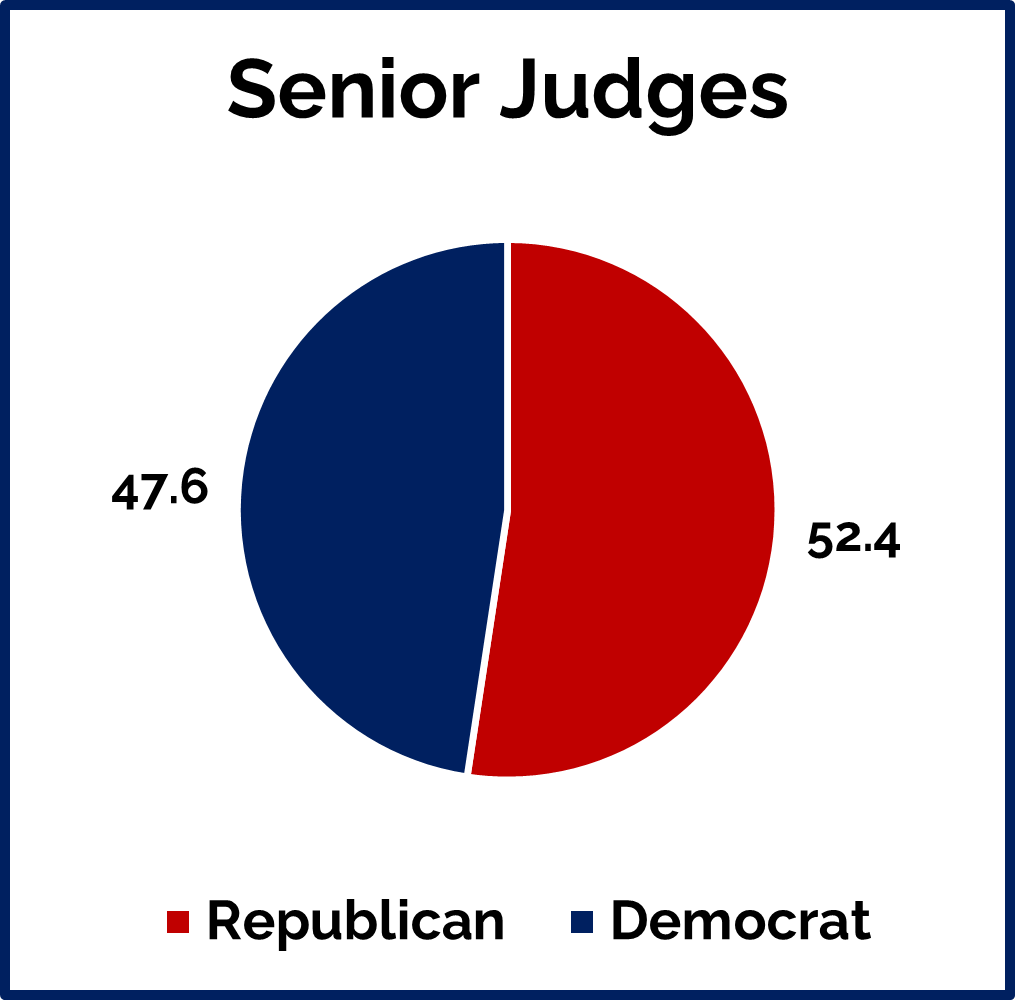
Composition of U.S. District Court
(Percent Appointed)
Article I gives Congress authority to create “Tribunals inferior to the Supreme Court” which also require presidential nomination and Senate confirmation. The current Article I tribunals are the U.S. Court of Federal Claims (16 positions), U.S. Tax Court (19 positions), U.S. Court of Appeals for the Armed Forces (five positions), and U.S. Court of Appeals for Veterans Claims (seven positions). Judges on these tribunals serve for 15-year terms. Data in this Judicial Appointments Memo are for judges on Article III courts.
How can we help?
Use the search below to quickly find answers, resources, and support tailored to your needs